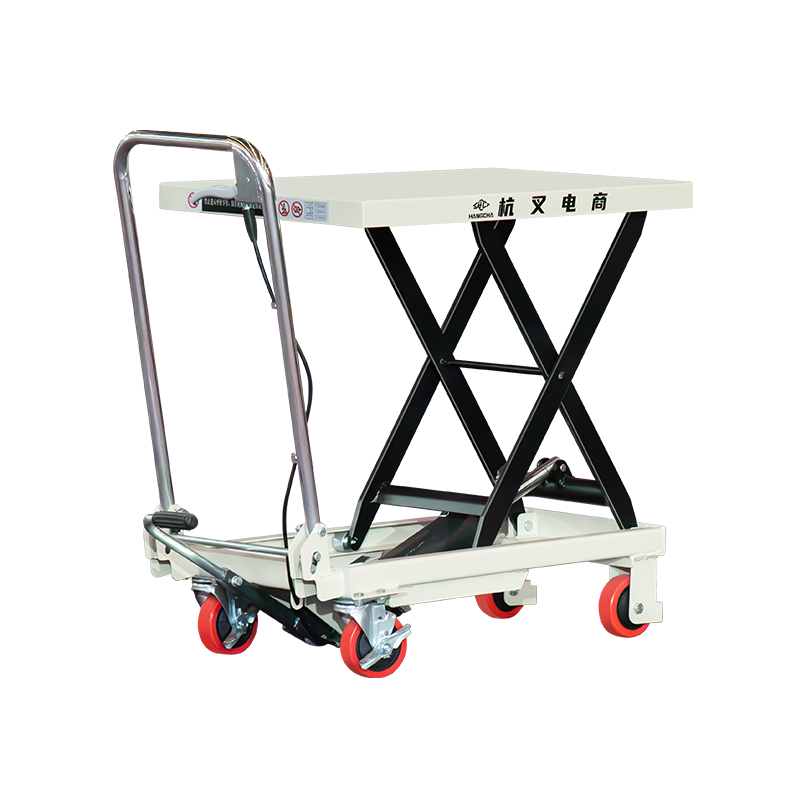
In modern industrial workflows, material handling is no longer just about moving items from point A to point B. It is about precision, ergonomic integration, and throughput optimization. Whether you are managing an e-commerce fulfillment center, a heavy manufacturing assembly line, or a cleanroom food processing facility, the humble lift table is often the backbone of your daily operations. This guide provides an in-depth, peer-level look at selecting, calculating, buying, maintaining, and safely operating industrial lift tables in the U.S. market.
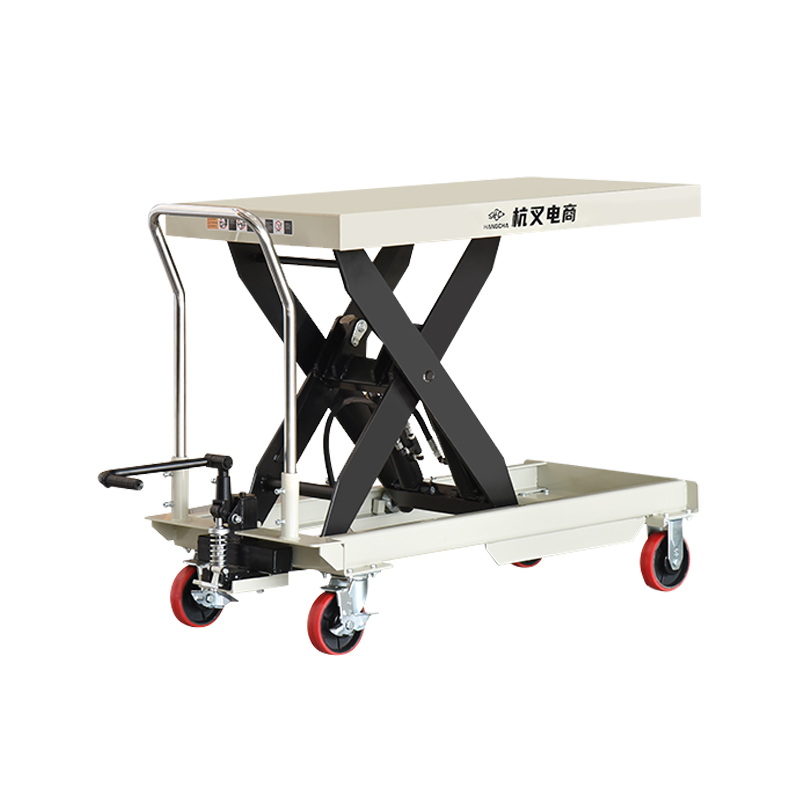
To choose the right lift table, we first need to clear up a common terminology mix-up: "scissor" refers to the mechanical structural linkage, whereas "hydraulic," "electric," and "pneumatic" refer to the power systems that drive those linkages. A single machine is often a combination of both—for instance, a hydraulic scissor lift table.
The core structural design and power mechanisms determine how a table behaves under load, how fast it rises, and how much maintenance it will demand over its operating life:
Below is a direct comparison of these drive systems across key performance metrics:
| Feature / Metric | Hydraulic Drive | Electric Mechanical | Pneumatic Drive |
|---|---|---|---|
| Load Distribution | Excellent; centered cylinder pressure | Excellent; uniform screw torque | Moderate; air compression variance |
| Lifting Speed | Moderate (variable via flow valves) | Highly precise and constant | Fast but harder to control precisely |
| Power Source | 110V/230V/460V AC or battery | Single/Three-Phase AC | Compressed air supply (80-100 PSI) |
| Typical Failure Modes | Seal leaks, valve clogging, hose wear | Screw wear, motor brush failure | Air bag puncture, moisture in lines |
| Maintenance Frequency | Medium (Oil changes, seal checks) | Low to Medium (Screw lubrication) | Low (Condensation drainage) |
Mobile vs. Stationary Systems: Stationary lift tables are anchored to the floor (or pit-mounted) to handle high-capacity, high-impact loads with zero wobble. Mobile units, equipped with heavy-duty polyurethane or steel casters, allow transport across the facility floor. However, mobile units introduce distinct safety concerns, requiring mechanical brakes, lower capacities, and strict floor-levelness requirements to prevent tip-overs during movement.
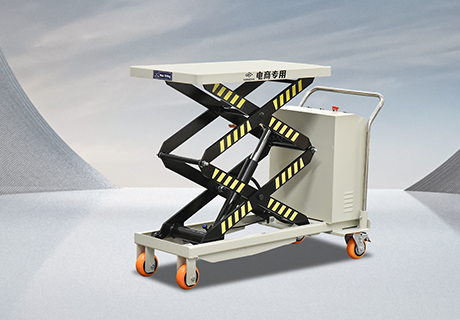
Proper sizing goes far beyond matching a catalog rating to the weight of your heaviest pallet. You must account for how that load is applied, the dynamic forces at play, and physical clearance constraints.
To avoid structural fatigue or premature hydraulic seal failure, use this equation to calculate your minimum required rated capacity:
Required Capacity = (Static Load Weight * Safety Factor) * Dynamic Impact Coefficient
Let's run through a quick example: If you are lifting a 3,000 lbs eccentric metal casting that is placed on the table via an overhead crane (introducing moderate shock), your calculation would look like this:
Required Capacity = (3,000 lbs * 1.5) * 1.3 = 5,850 lbs
In this scenario, a standard 4,000 lbs capacity table is insufficient; you should step up to a 6,000 lbs rated model.
| Typical Application | Load Range (lbs) | Recommended Platform Size (in.) | Target Safety Factor |
|---|---|---|---|
| Manual Assembly / Packing Station | 500 - 2,000 | 24 x 36 to 36 x 48 | 1.2 (Uniform) |
| Palletizing / Conveyor Interface | 2,500 - 5,000 | 48 x 48 to 48 x 60 | 1.5 (Off-Center) |
| Heavy Die / Mold Handling | 6,000 - 15,000+ | 60 x 72 to 72 x 96 | 1.5+ (Shock/Concentrated) |
Navigating the U.S. procurement landscape for lift tables requires balancing up-front capital expenditures (CapEx) against long-term operational expenditures (OpEx).
A lift table's quote is rarely its final installed cost. Make sure your budget accounts for these key elements:
An industrial lift table is only as reliable as its installation and preventive maintenance routine. Poor installation or neglected maintenance leads to uneven wear, structural binding, and eventual failure.
The mounting surface must be level to within 1/8 inch across the entire footprint. If mounting a stationary table, use heavy-duty wedge anchors to secure the base frame to the concrete slab to prevent tipping under off-center loads. For pit installations, ensure the electrical and hydraulic conduits are protected from moisture and debris, and verify that the pit's perimeter angle iron is safe and flush with the concrete floor.
Keep your equipment operating smoothly with this structured inspection program:
| Symptom | Likely Root Cause | Corrective Action |
|---|---|---|
| Table fails to rise (motor hums) | Overload condition or low hydraulic fluid | Reduce load to rated capacity; top off fluid level |
| Table rises slowly or stutters | Air trapped in hydraulic lines or clogged filter | Bleed the hydraulic cylinders; replace inline fluid filter |
| Table drifts down after stopping | Leaking down-valve or worn cylinder seal | Clean/replace the lowering solenoid valve; rebuild cylinder seals |
| Platform raises unevenly/tilts | Uneven load distribution or mechanical binding | Center the load; inspect scissor tracks for obstructions or wear |
In the United States, industrial lift table design, operation, and integration are governed by strict regulatory frameworks. Failing to comply can lead to severe OSHA fines, workers' compensation claims, and operational shutdowns.
Crucial Standard: ANSI MH29.1
This is the primary safety standard for industrial scissor lifts. It specifies construction tolerances, structural safety factors (typically 3:1 for yield strength), and guardrail requirements. Any lift table integrated into your U.S. facility should carry an explicit certification of compliance with ANSI MH29.1.
When integrating a lift table with automatic palletizers, conveyor lines, or mechanical attachments (like tilt/turn tables), always deploy these safety systems:
Selecting the perfect lift table is an investment in your team's safety and operational throughput. Don't leave your selection to guesswork.
Contact our engineering support team today to receive a free, personalized workstation assessment. We can provide standard or custom CAD files to match your facility layouts, comprehensive technical spec sheets, and clear pricing options tailored to your project timeline.
Call us directly at 1-800-555-LIFT (5438) or email our application engineers to request a custom quote.
"Scissor-style" refers to the folding cross-leg mechanical structure of the lift table. "Hydraulic" and "electric" refer to how that structure is powered. Hydraulic tables use pressurized oil cylinders to push the legs open, offering a highly economical, powerful lift. Electric tables use a motor to turn a mechanical ball screw or belt drive, providing high-precision height control and zero height drift over time.
To calculate your minimum rated capacity, multiply your static load weight by a safety factor (1.2 for uniform centered loads, 1.5 for eccentric or off-center loads), then multiply by an impact coefficient (typically 1.3 to 1.5) if the load is dropped or rolled onto the table dynamically. Formula: Required Capacity = (Static Weight * Safety Factor) * Impact Coefficient.
Choose a stationary model if your table interfaces with fixed machinery (like conveyors or robot cells), handles loads exceeding 5,000 lbs, or experiences side-impact loading. Choose a mobile model if you need to transport parts between multiple assembly cells or perform maintenance tasks at different spots across your plant floor.
Standard light-to-medium-duty lift tables range from $2,500 to $5,000. Heavy-duty, highly customized, or cleanroom-certified units can range from $6,000 to over $15,000. Total Cost of Ownership (TCO) should also include freight ($300-$1,000), concrete pit excavation ($3,000-$8,000 if flush-mounted), electrical wiring, and annual maintenance/seal replacement costs.
To integrate a lift table safely, use electrical safety interlocks that prevent the conveyor or turntable from operating unless the lift table is at the correct, safe height. Add safety skirts or light curtains to block access during motorized rotation, and verify that any added attachment doesn't shift the center of gravity past the table's eccentric load rating.
Routine maintenance includes daily visual leak and E-stop checks, monthly pivot pin lubrication, and annual hydraulic fluid flushes. We recommend keeping a standard spare parts kit on site, containing replacement hydraulic cylinder seals, a set of high-pressure hoses, spare limit switches, and a replacement lowering solenoid valve to minimize unexpected downtime.
In the U.S., verify that the table is fully compliant with the ANSI MH29.1 safety standard. Before accepting and commissioning the unit, perform a formal lock-out/tag-out (LOTO) walk-through, test all emergency stop buttons, verify that the safety velocity fuses are active on the hydraulic lines, and run a full-capacity static load test to check for structural deflection.

+86-0571-88131206

+86-19084200370

+86-17816721301
 عربى
عربى