Key Takeaways: High-Efficiency Forklift Maintenance
If you only have one minute, here are the essential facts for minimizing forklift downtime and maximizing equipment ROI:
- Primary Maintenance Interval: Standard forklift service should occur every 250 to 500 operating hours. Major overhauls (hydraulic and cooling systems) are required every 2,000 hours.
- Top 3 Causes of Downtime: Neglected clogged filters, worn brake pads, and improper battery watering (for lead-acid models) account for nearly 70% of unplanned equipment failures.
- Economic Impact: Proactive preventive maintenance (PM) reduces emergency repair costs by 24% and extends the total machine lifecycle by up to 40%.
- Inventory Strategy: Maintaining an on-site stock of critical spare parts—specifically air/oil filters, hydraulic hoses, and spark plugs—reduces the Mean Time to Repair (MTTR) from days to minutes.
- Daily Inspections: The “Pre-Shift Circle Check” is the most effective way to catch minor leaks or tire damage before they lead to a mid-shift breakdown.
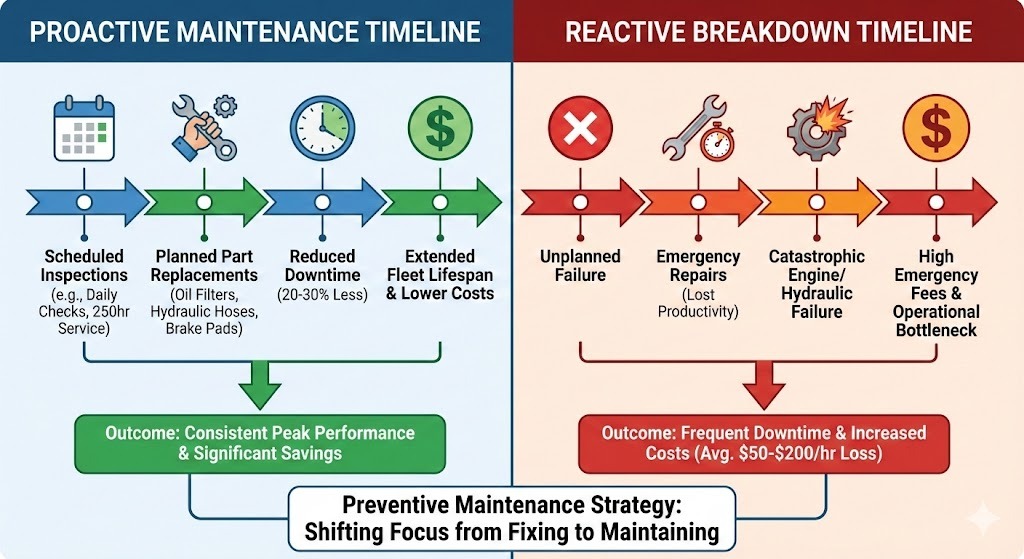
Forklift preventive maintenance (PM) is a proactive strategy of scheduled inspections and part replacements designed to identify mechanical issues before they lead to equipment failure. By adhering to strict replacement cycles for critical components like oil filters, hydraulic hoses, and brake pads, businesses can reduce unplanned downtime by 20-30% and extend the total service life of their fleet.
Why Is Forklift Maintenance Critical for Material Handling?
Forklifts are the backbone of modern logistics and manufacturing. When a single forklift goes offline, it creates a bottleneck that slows down the entire supply chain. Forklift downtime—the period during which a machine is unavailable for work—costs companies an average of 50 to 200 USD per hour in lost productivity and emergency repair fees.
Implementing a preventive maintenance program shifts the focus from “fixing what is broken” to “maintaining peak performance.” This proactive approach ensures that minor wear-and-tear does not escalate into catastrophic engine or hydraulic failure.
What Is Forklift Preventive Maintenance (PM)?
Preventive Maintenance (PM) consists of regular, planned servicing performed based on specific time intervals or machine “hour meter” readings. Unlike reactive maintenance, which occurs after a breakdown, PM focuses on Replacement Cycles: the predetermined lifespan of a part before it is likely to fail.
Key Benefits of a Proactive PM Program:
- Reduced Unplanned Downtime: Catching small leaks or frayed belts during an inspection prevents sudden mid-shift breakdowns.
- Extended Equipment Lifespan: Regular lubrication and filter changes prevent premature engine and motor wear.
- Enhanced Operator Safety: Maintaining the brake system and steering linkages ensures the machine responds correctly in emergency situations, reducing workplace accidents.
- Lower Long-term Costs: Replacing a 20 USD filter on schedule is significantly cheaper than replacing a 5,000 USD hydraulic pump damaged by contaminated oil.
Consequences of Neglecting Forklift Maintenance:
- Safety Risks: Worn tires or failing brakes can lead to tip-overs or collisions.
- Increased Repair Costs: One failing part often causes “cascading failures” in connected systems.
- Decreased Resale Value: Forklifts with poor maintenance records have significantly lower trade-in values.
Understanding Critical Replacement Cycles
To maintain high uptime, managers must track Hour Meters—devices that record the total operating time of the forklift. Common maintenance intervals include:
- Daily Checks: Visual inspections of tires, fluids, and safety lights.
- 250-500 Hours: Minor service including engine oil changes and filter replacements.
- 2,000 Hours: Major service including hydraulic oil replacement and cooling system flushes.
Key Forklift Components and Their Replacement Cycles
For maximum reliability, forklift components are categorized into five core systems: Engine, Hydraulic, Brake, Steering, and Electrical. Most manufacturers recommend a primary service interval every 250 to 500 operating hours.
1. Engine and Powertrain Components
The standard interval for forklift engine oil and filter changes is 250 to 500 hours, depending on the fuel type (LPG, Diesel, or Gasoline). Clean air and oil are essential to prevent internal friction and overheating.
- Oil and Filters: Replace every 250–500 hours. Dirty oil loses its viscosity and fails to lubricate moving parts.
- Air Filters: Inspect weekly; replace every 1,000 hours or sooner in dusty warehouse environments. A clogged air filter reduces fuel efficiency and engine power.
- Spark Plugs / Glow Plugs: Replace every 2,000 hours. Faulty plugs cause difficult starting and uneven engine idling.
- Coolant (Antifreeze): Flush and replace every 2,000 hours (or annually). This prevents rust and scale buildup inside the radiator.
- Hoses and Belts: Inspect every 250 hours for cracks or “glazing.” Replace immediately if wear is detected to avoid sudden engine seizure.
2. Hydraulic System Maintenance
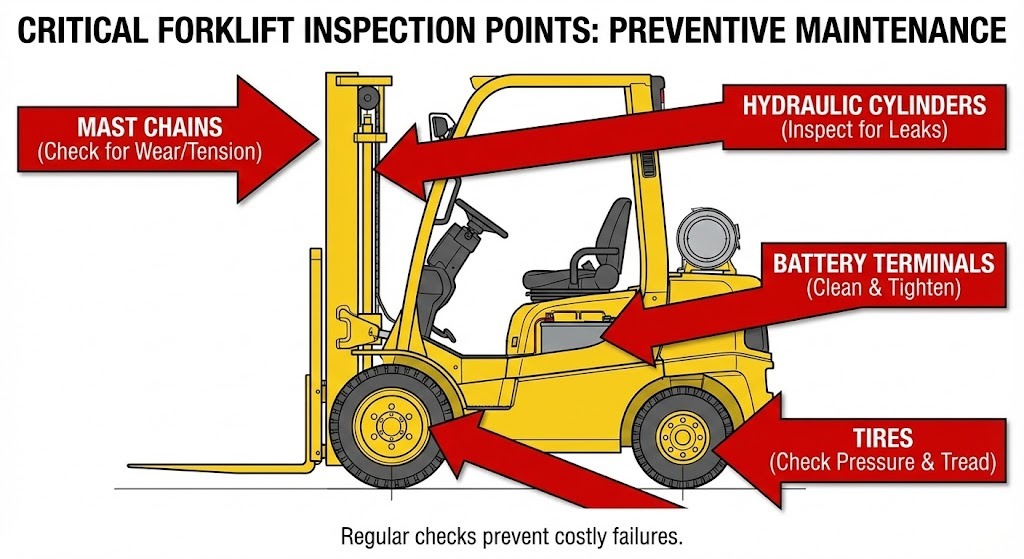
Hydraulic oil should be replaced every 2,000 operating hours to prevent pump cavitation and seal failure caused by fluid oxidation. The hydraulic system is responsible for the lifting and tilting functions of the mast.
- Hydraulic Oil: Change every 2,000 hours. Over time, heat breaks down the oil, reducing its ability to transmit power.
- Hydraulic Filters: Replace every 500–1,000 hours. These filters capture metal shavings and debris that can score cylinder walls.
- Hoses and Fittings: Inspect daily for damp spots or “sweating.” A high-pressure hose burst can cause the load to drop instantly.
- Cylinders and Seals: Inspect for “drifting” (when the mast slowly lowers on its own). Replace seals if oil is visible on the chrome cylinder rods.
3. Brake and Steering Systems
Forklift brake pads typically require replacement every 2,000 to 5,000 hours, but safety inspections must occur every 250 hours. Unlike cars, forklifts use their brakes constantly for “inching” and positioning.
- Brake Pads/Shoes: Replace when the lining thickness falls below 3mm.
- Brake Fluid: Check levels monthly; flush and replace every 2,000 hours to remove moisture that causes internal corrosion.
- Steering Linkages: Grease every 250 hours. Loose steering or “play” in the wheel indicates worn bushings or tie rod ends.
4. Tires and Traction
Forklift tires must be replaced when they wear down to the “60J line” (the wear indicator) or when they lose more than 30% of their original diameter.
- Tire Pressure: (For Pneumatic tires) Check daily. Incorrect pressure causes instability and uneven wear.
- Tire Condition: Look for “chunking” (missing pieces of rubber) or flat spots caused by emergency braking. Solid (Press-on) tires should be replaced when wear reaches the top of the brand name lettering.
5. Electrical and Battery System
Lead-acid forklift batteries require “watering” (distilled water) every 5 to 10 charging cycles to prevent permanent plate damage.
- Battery Terminals: Clean and apply anti-corrosive spray every 250 hours.
- Fuses and Wiring: Inspect for brittle insulation or charred connectors, especially in high-vibration electric forklifts.
- Contactors: Inspect for “pitting” or welding every 1,000 hours in electric models to ensure smooth motor control.
Summary Table: Forklift Replacement Cycles
| Component Category |
Key Item |
Recommended Replacement/Service Interval |
| Engine |
Engine Oil & Filter |
250 - 500 Hours |
| Engine |
Air Filter |
1,000 Hours (or as needed) |
| Hydraulic |
Hydraulic Fluid |
2,000 Hours |
| Hydraulic |
Hydraulic Filter |
500 - 1,000 Hours |
| Brakes |
Brake Shoes/Pads |
2,000 - 5,000 Hours |
| Electrical |
Battery Watering |
Every 1-2 Weeks (Lead-Acid) |
| Cooling |
Coolant Flush |
2,000 Hours / 12 Months |
Technical Glossary
- Cavitation: The formation of vapor bubbles in hydraulic fluid, which can implode and erode metal components in the pump.
- Inching: The practice of slightly depressing the brake pedal to disconnect the transmission, allowing the operator to rev the engine for faster lifting while moving slowly.
- Viscosity: A measure of a fluid’s resistance to flow; “thick” oil has high viscosity.
How to Create an Effective Forklift Preventive Maintenance Schedule
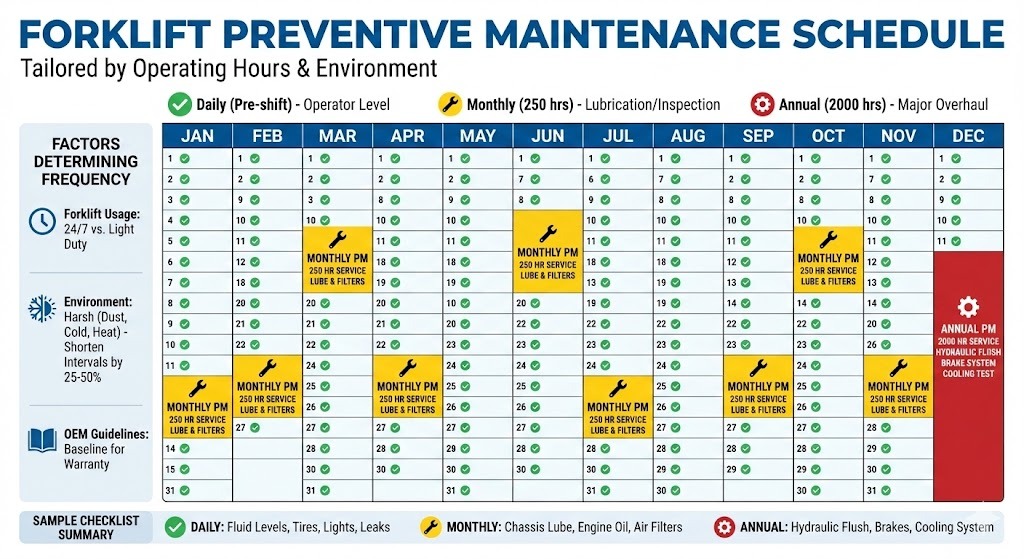
A forklift preventive maintenance (PM) schedule is a calendar of service tasks based on operating hours: Daily (Pre-shift), Monthly (250 hours), Quarterly (500-1,000 hours), and Annually (2,000 hours). The most effective schedules are tailored to the specific Operating Environment, such as high-dust warehouses, cold storage, or outdoor construction sites.
Factors Determining Your Maintenance Frequency:
- Forklift Usage: Machines running 24/7 (three shifts) require service much faster than those used for 2 hours a day.
- Environment: Harsh conditions (extreme heat, sub-zero cold, or corrosive chemical plants) require intervals to be shortened by 25-50%.
- Manufacturer (OEM) Guidelines: Always refer to the Original Equipment Manufacturer (OEM) manual as the baseline for warranty compliance.
Sample PM Checklist
- Daily (Operator Level): Check fluid levels (oil, fuel, coolant), inspect tires for cracks, test horn/lights, and check for leaks under the chassis.
- Monthly (250–500 Hours): Lubricate chassis and mast components, change engine oil, and inspect air filters.
- Annual (2,000 Hours): Complete hydraulic fluid flush, brake system overhaul, and cooling system pressure test.
Identifying Critical Spare Parts to Keep in Stock
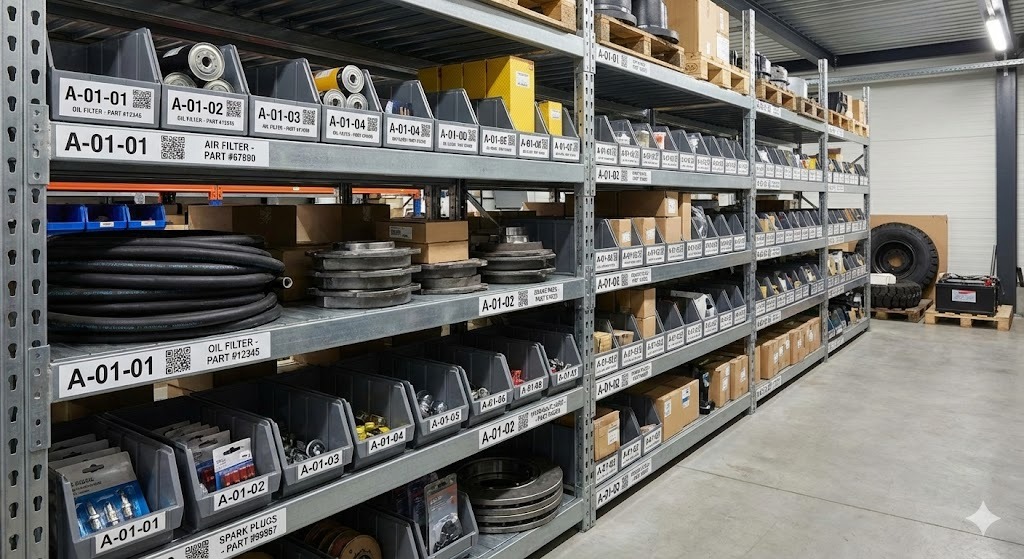
Critical spare parts are high-wear components that, if failed, cause immediate machine immobilization; stocking these items can reduce mean time to repair (MTTR) from days to minutes. Maintaining an on-site inventory is the most effective way to “Refuse Downtime.”
The “Must-Have” Spare Parts Inventory:
- Filters: Keeping Oil, Air, Fuel, and Hydraulic filters in stock is essential for every scheduled service.
- Friction and Wear Parts: Brake pads, v-belts, and spark plugs are inexpensive but critical for operation.
- Consumables: Hydraulic hoses (standard sizes), fuses, bulbs, and seals.
- Emergency Items: A spare set of tires and a backup battery (or charger components) prevent long-term delays during peak seasons.
Benefits of On-Site Spare Parts Management:
- Eliminate Shipping Delays: No waiting for a supplier to ship a 10 USD part while a 50,000 USD machine sits idle.
- Bulk Purchasing Savings: Buying filters and oil in volume reduces the unit cost per part.
- Faster Repairs: Technicians can begin work immediately without waiting for procurement approvals.
Tips for Managing Spare Parts Inventory
Effective inventory management relies on the “First-In, First-Out” (FIFO) principle to ensure that rubber components like hoses and seals do not degrade on the shelf.
- Use Hour Meter Tracking: Use data from your forklift’s Hour Meter (the gauge that records engine run time) to predict when you will need parts.
- Implement Min/Max Levels: Set a “Minimum” stock level for filters; when you reach that level, trigger a reorder automatically.
- Standardize Your Fleet: If possible, use the same brand and model of forklifts (e.g., all Toyota or all Hangcha) to minimize the variety of parts you need to stock.
Contextual Snippets
- OEM (Original Equipment Manufacturer): The company that originally built the forklift (e.g., Hyster, Toyota). Using OEM parts is often required to maintain warranty status.
- MTTR (Mean Time To Repair): A key performance indicator (KPI) measuring the average time required to troubleshoot and repair failed equipment.
- FIFO (First-In, First-Out): An inventory valuation and management method where the oldest stock is used first to prevent expiration or material degradation.
Implementing a Data-Driven Replacement Cycle
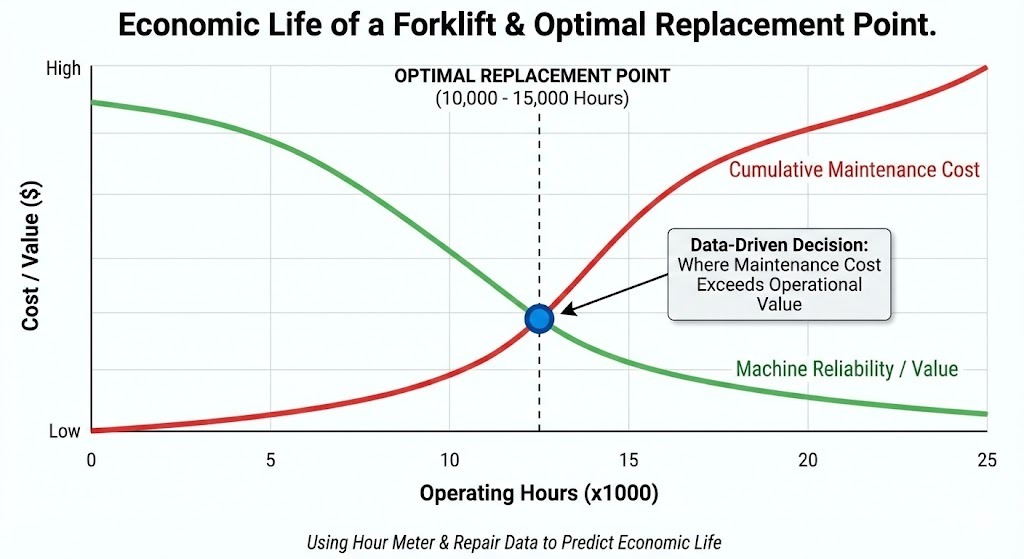
A forklift replacement cycle is a strategic schedule for retiring and replacing components or entire machines based on their economic life, typically ranging from 10,000 to 15,000 operating hours. By using Hour Meter data, fleet managers can predict when a part’s maintenance cost will exceed its operational value.
How to Define Your Replacement Cycles:
- Track Utilization: Use the hour meter to record daily usage. Components in high-intensity applications (e.g., 24/7 port operations) require shorter cycles.
- Monitor Repair Costs: When the cost of monthly repairs for a specific system (like the transmission) exceeds 30% of the machine’s value, the replacement cycle for that system should be accelerated.
- Use Predictive Data: Modern forklifts equipped with Telematics can signal when a part is nearing its “wear limit” before it actually breaks.
Troubleshooting Common Forklift Problems
Quick troubleshooting allows operators to distinguish between minor issues—such as a tripped fuse—and major mechanical failures that require a qualified technician.
| Symptom |
Potential Cause |
Immediate Action |
| Mast won’t lift |
Low hydraulic fluid or clogged filter |
Check fluid levels; inspect for leaks. |
| Engine won’t start |
Battery discharge or faulty spark plugs |
Test battery voltage; check fuel supply. |
| Grinding noise when braking |
Worn brake pads or shoes |
Stop operation immediately; replace pads. |
| Erratic steering |
Low power steering fluid or worn linkages |
Check fluid; inspect tie rods for play. |
| Overheating |
Clogged radiator or low coolant |
Clean radiator fins; check coolant level. |
The Role of Forklift Training in Maintenance
Proper operator training can reduce maintenance costs by up to 15% by eliminating “abusive” driving habits like fast directional changes and overloading.
- Daily Inspection Training: Operators must be trained to perform the “Circle Check” (visual and functional inspection) before every shift.
- Reporting Protocols: Establish a clear “Tag-Out” system where operators can report minor issues (like a frayed belt) before they become major failures.
- Operational Techniques: Training on smooth braking and lifting techniques directly extends the lifespan of brake pads and hydraulic seals.
Maintenance Considerations for Top Forklift Brands
While the principles of PM are universal, different manufacturers have specific engineering focuses:
- Toyota: Known for the System of Active Stability (SAS); requires specialized electronic diagnostics during PM.
- Hangcha: Focuses on high-efficiency lithium-ion technology and AGV (Automated Guided Vehicle) integration, requiring specialized electrical and sensor calibration.
- Hyster/Yale: Often used in heavy-duty applications; focuses heavily on robust hydraulic cooling systems.
- Crown/Raymond: Dominant in warehouse “reach” trucks; requires frequent inspection of motor brushes and drive tires.
Conclusion: Maximizing Uptime Through Proactive Care
Refusing downtime is achieved through the disciplined application of preventive maintenance, strict adherence to part replacement cycles, and maintaining a strategic inventory of critical spares. A proactive approach does not just save money on repairs; it ensures a safer workplace and a more reliable supply chain.
By treating forklift maintenance as an investment rather than an expense, businesses can maximize the Return on Investment (ROI) of their material handling equipment and keep their operations running at peak efficiency.
Technical Glossary
- Telematics: A system that combines telecommunications and informatics to monitor a forklift’s location, status, and mechanical health in real-time.
- Tag-Out: A safety procedure used to ensure that a forklift is properly shut off and not started again until maintenance or repair work is completed.
- ROI (Return on Investment): A performance measure used to evaluate the efficiency of an investment, calculated by comparing the gain from the investment to its cost.
Frequently Asked Questions (FAQ)
1. How often should a forklift be serviced?
Most forklifts require a minor service every 250 to 500 operating hours. Major service intervals, which include hydraulic fluid changes and intensive system flushes, typically occur every 2,000 hours or once per year.
2. What are the most common forklift parts that fail?
The most frequent points of failure are filters (oil, air, and hydraulic), tires, brake pads, and starter batteries. In internal combustion models, v-belts and spark plugs are also high-wear items that require regular monitoring.
3. How do I know when to replace my forklift tires?
Replace forklift tires if you see “chunking” (missing rubber), flat spots, or if the wear reaches the 60J line (wear indicator). For solid tires, a general rule is to replace them when 30% of the original rubber has worn away.
4. Can I use standard automotive oil in my forklift?
No. Forklift engines operate under constant heavy loads and high-heat conditions that differ from passenger cars. You should always use heavy-duty industrial engine oil that meets the specific viscosity and API (American Petroleum Institute) ratings defined in your equipment manual.
5. Why is my forklift’s hydraulic system moving slowly?
Slow hydraulic performance is usually caused by low hydraulic fluid levels, a clogged hydraulic filter, or a failing hydraulic pump. If the fluid appears milky, it indicates water contamination and requires an immediate system flush.
6. How long does a lead-acid forklift battery typically last?
With proper maintenance (regular watering and equalizing charges), a lead-acid battery lasts approximately five years or 1,500 charging cycles. Neglecting water levels can reduce this lifespan by more than 50%.
7. What is the difference between preventive and reactive maintenance?
Preventive maintenance is scheduled work performed to prevent failure (e.g., changing oil before it gets dirty). Reactive maintenance is repair work performed after a part has already broken. Preventive maintenance is significantly cheaper and reduces unplanned downtime.


 عربى
عربى