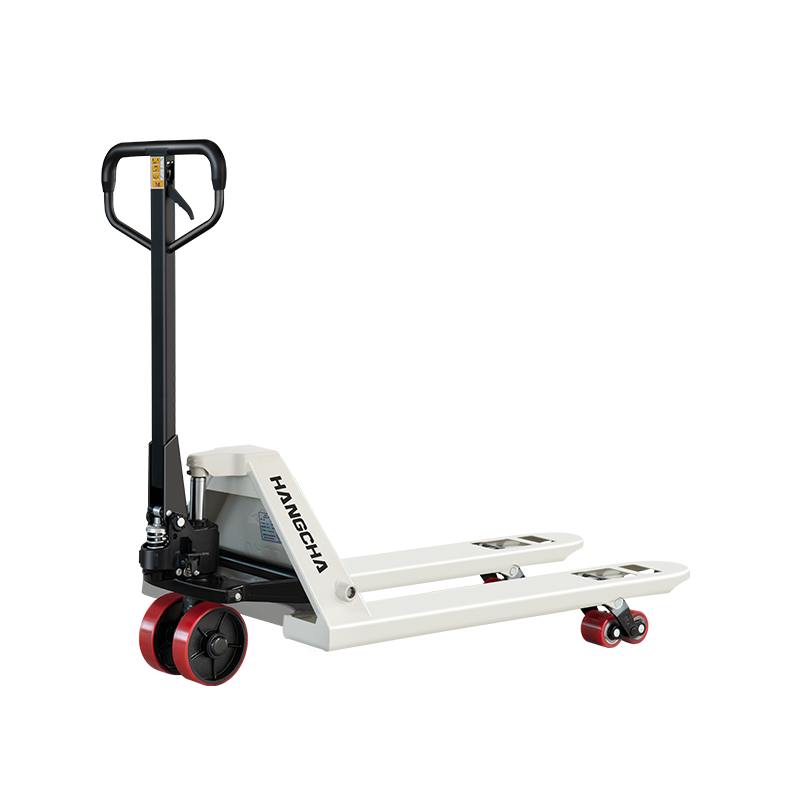
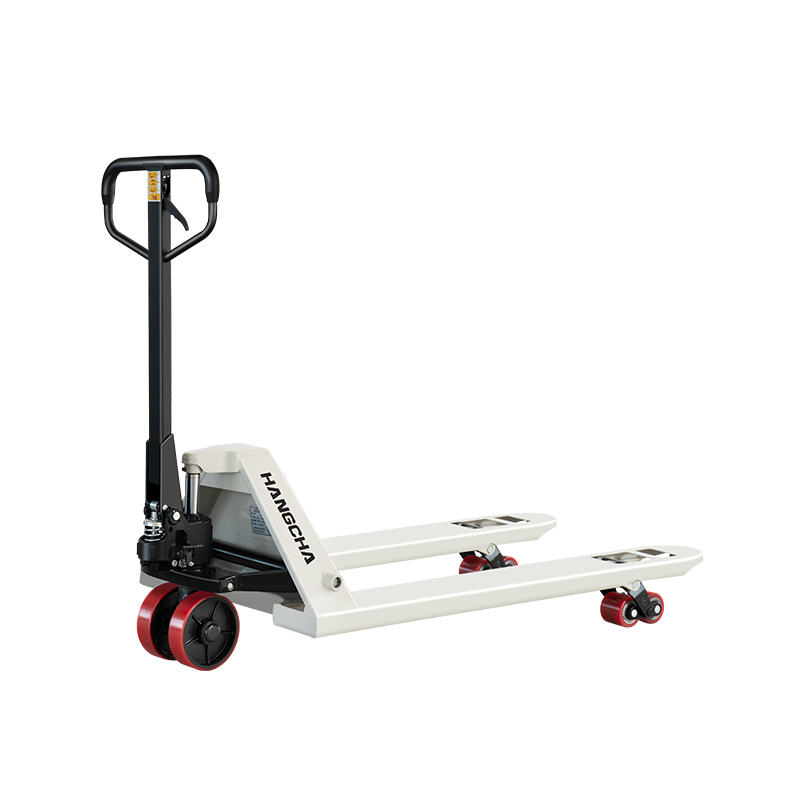
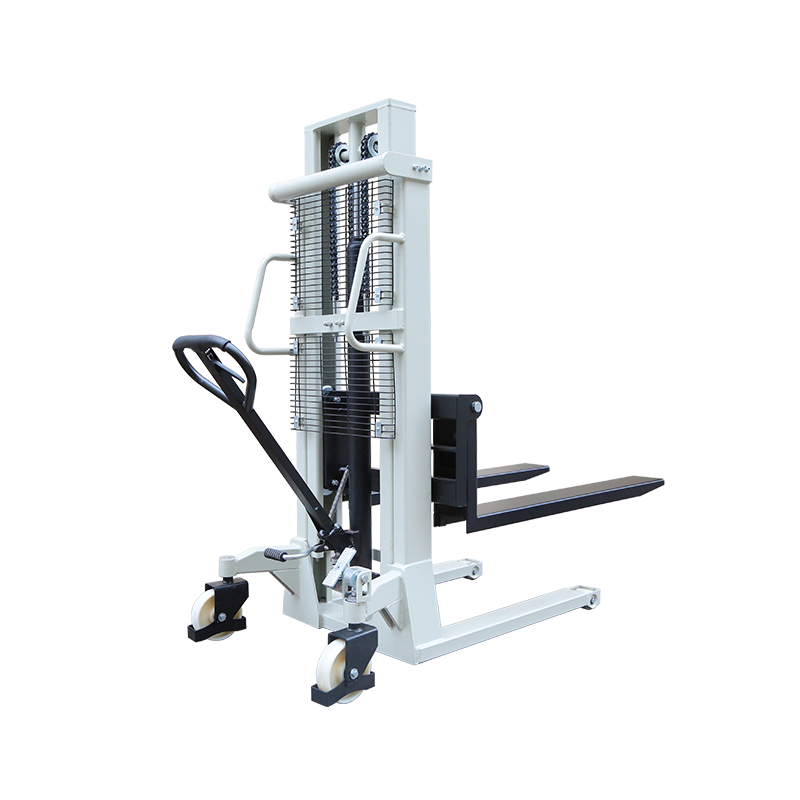
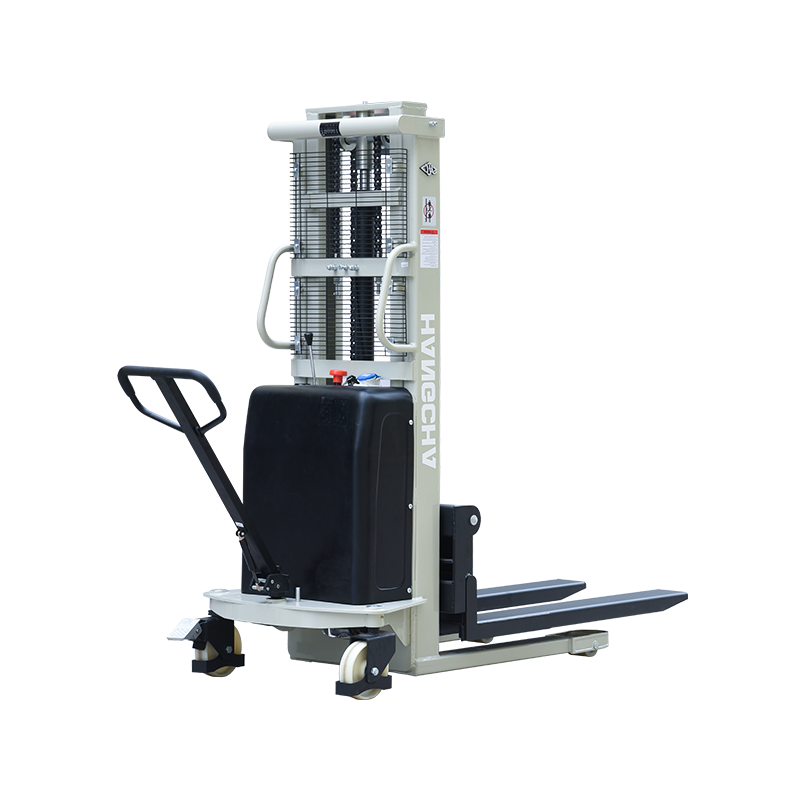
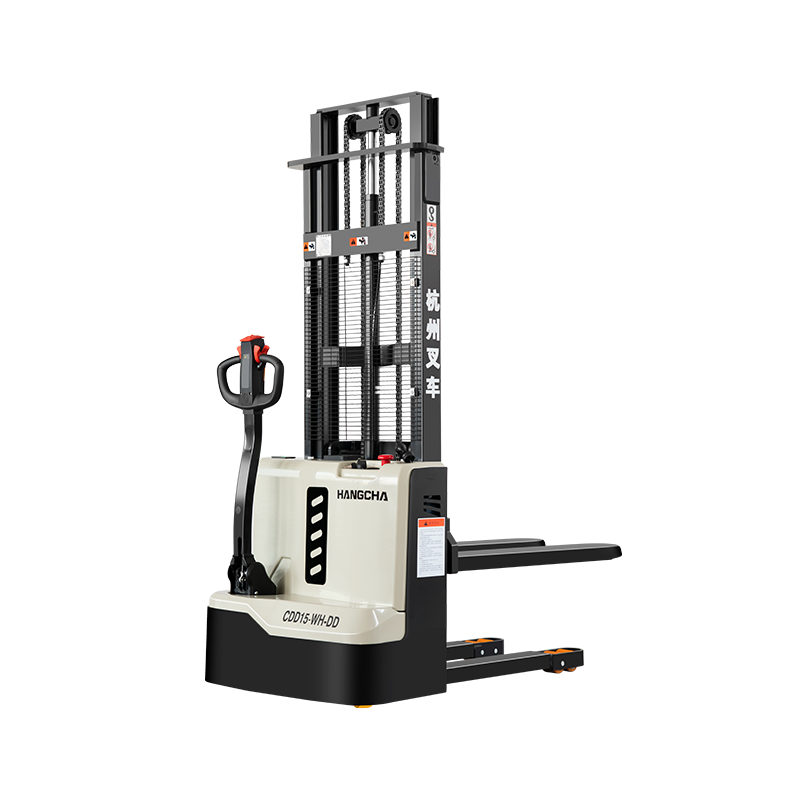
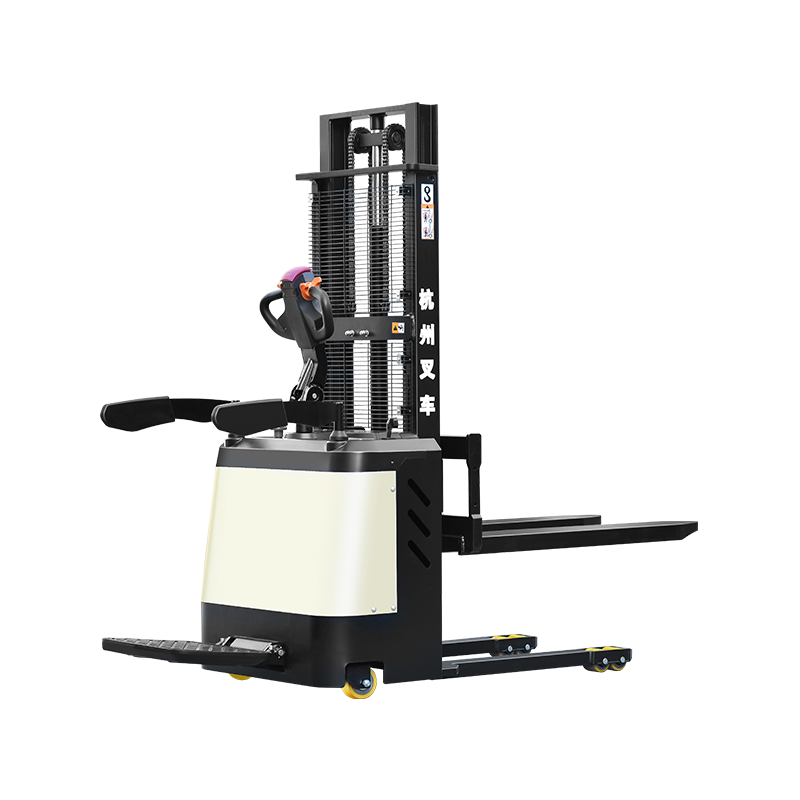
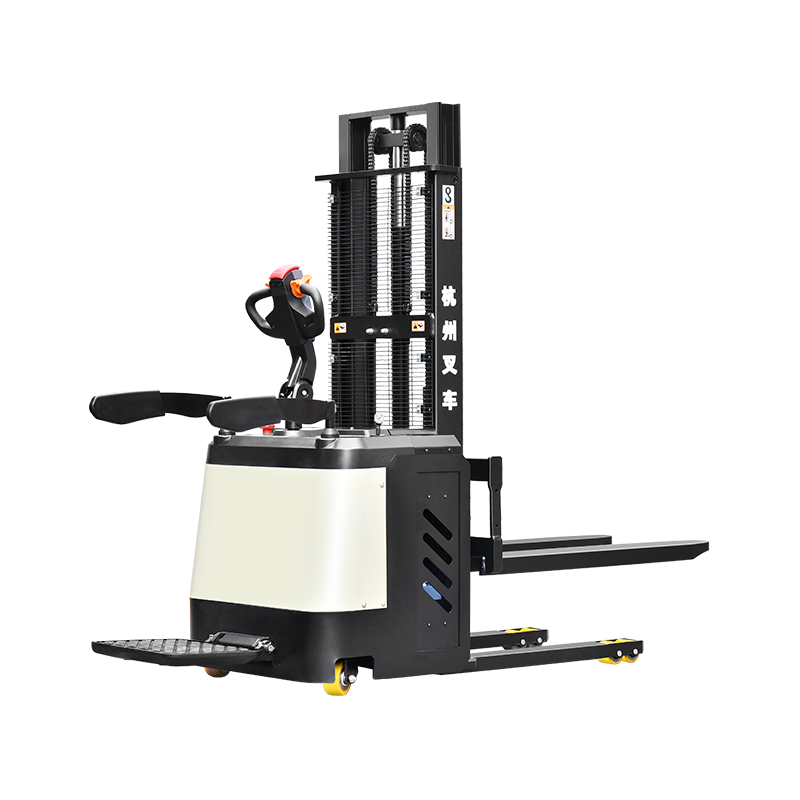
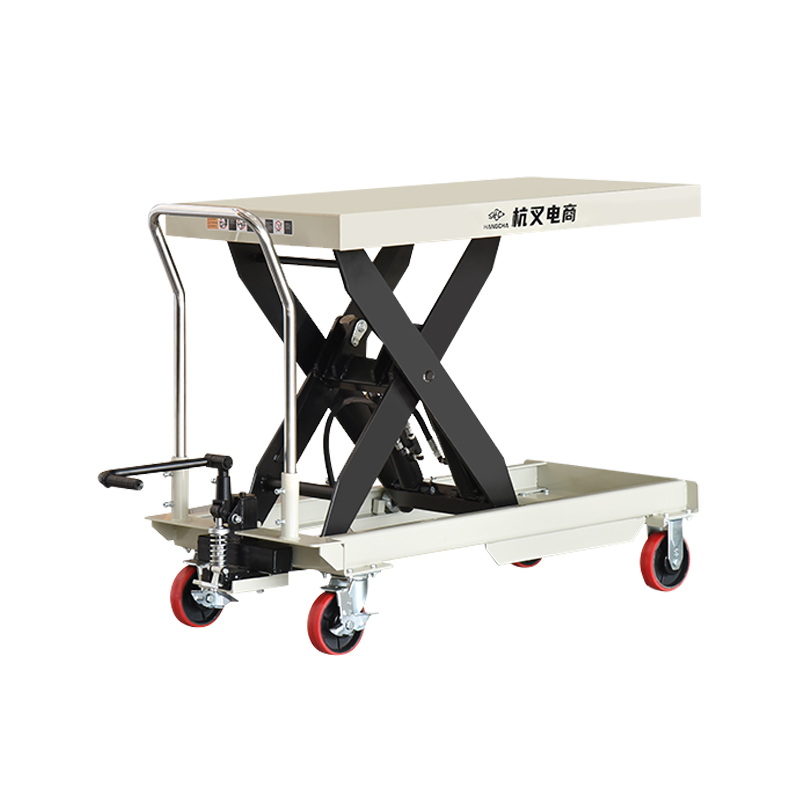
In high-density storage environments, space is capital. The ability of a pallet truck to navigate tight corners directly impacts the Storage Density and Operational Cycle Time. For warehouse managers, two metrics define this capability: Turning Radius (Wa) and Right Angle Stacking Aisle Width (Ast).
Summary:
The Turning Radius (Wa) is the minimum arc a pallet truck can describe while turning. It serves as the primary variable in calculating the Right Angle Stacking Aisle Width (Ast), which dictates the minimum distance required between pallet racks for a 90-degree turn.
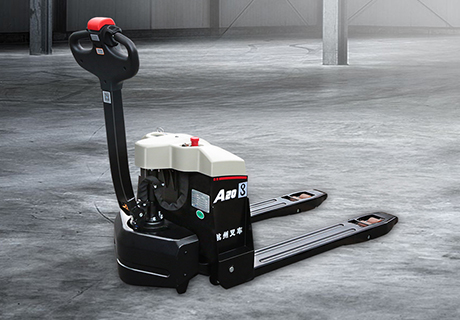
Understanding the geometric relationship between these two parameters is essential for facility planning and equipment selection.
For most mid-to-high-end electric pallet trucks, the Turning Radius (Wa) typically ranges between 1300 mm and 1500 mm. This distance is measured from the center of the drive wheel to the furthest point of the truck’s chassis or forks during a full-lock turn.
Ast is the “real-world” metric. It calculates the total clearance needed for the truck, the pallet, and a safety buffer (usually 200 mm) to complete a turn between two racks.
The Ast Calculation Logic (Simplified):
Ast = Wa + l + a
Example: A pallet truck with a 1400 mm Wa carrying a 1200 mm pallet requires an Ast of approximately 2800 mm.
A “Compact Design” is only effective when paired with advanced control technology. Professional-grade pallet trucks utilize two key features to minimize the required Ast:
In extremely confined spaces, a standard pallet truck requires the tiller handle to be tilted toward the operator to engage the drive. This increases the overall length of the machine.
Modern B2B electric pallet trucks focus on a shortened Head Length (l2). By integrating the lithium battery and hydraulic pump more efficiently, manufacturers can reduce the distance from the fork face to the rear of the truck, directly lowering the Wa.
| Technical Metric | Value / Range | Operational Impact |
|---|---|---|
| Turning Radius (Wa) | 1300 mm - 1500 mm | Determines the sharpness of cornering |
| Head Length (l2) | 400 mm - 550 mm | Directly influences the Ast requirement |
| Turtle Speed Mode | Active / Vertical | Allows maneuverability in confined “dead zones” |
| Standard Ast | 2300 mm - 2800 mm | Defines the warehouse racking layout |
When selecting equipment, a smaller Turning Radius is not always the only goal. Professionals must balance:
Q1: How much safety buffer should I include in my Ast planning?
Answer: While the theoretical Ast is calculated using the Wa and pallet length, industry standards recommend a minimum safety buffer (a) of 200 mm. This accounts for operator error and prevents rack impact during high-speed pallet extraction.
Q2: Does the pallet size change the Turning Radius?
Answer: No, the Turning Radius (Wa) is a fixed mechanical property of the truck chassis. However, the Aisle Width (Ast) changes significantly based on pallet size. Longer pallets (e.g., 1500 mm) will require a much wider aisle regardless of the truck’s Wa.
Q3: Can “Turtle Speed” be used for long-distance transport?
Answer: No. Turtle Speed is a Precision Mode restricted to a maximum speed of 1.0 - 1.5 km/h. It is designed for fine-tuned positioning and “upright” driving in narrow aisles, not for general warehouse transit.

+86-0571-88131206

+86-19084200370

+86-17816721301
 عربى
عربى