In today's fast-paced logistical landscape, warehouse operators across the United States face a dual challenge: skyrocketing industrial real estate costs and a persistent shortage of skilled labor. To maximize profitability, modern supply chains must optimize every square inch of vertical and horizontal space. While traditional sitting forklifts have long been the workhorses of the fulfillment center, they demand wide operating aisles and represent a massive upfront capital investment.
Enter the pallet stacker—a highly versatile, compact, and cost-effective material handling solution engineered to bridge the gap between simple hand pallet jacks and heavy-duty lift trucks. For growing enterprises, choosing the correct pallet stacker is not merely a purchasing decision; it is a critical optimization strategy that directly impacts daily throughput, operator fatigue, and operational safety. This comprehensive guide from Hangzhou Hangcha E-Commerce Co., Ltd. explores the technical specifications, economic trade-offs, and compliance frameworks necessary to select the perfect stacker for your warehouse operations.
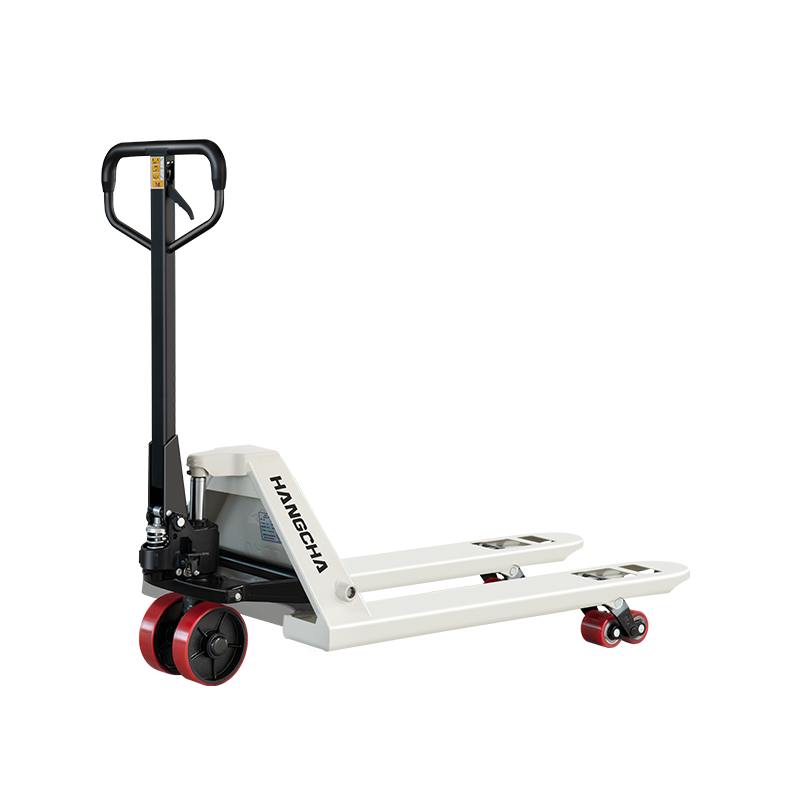
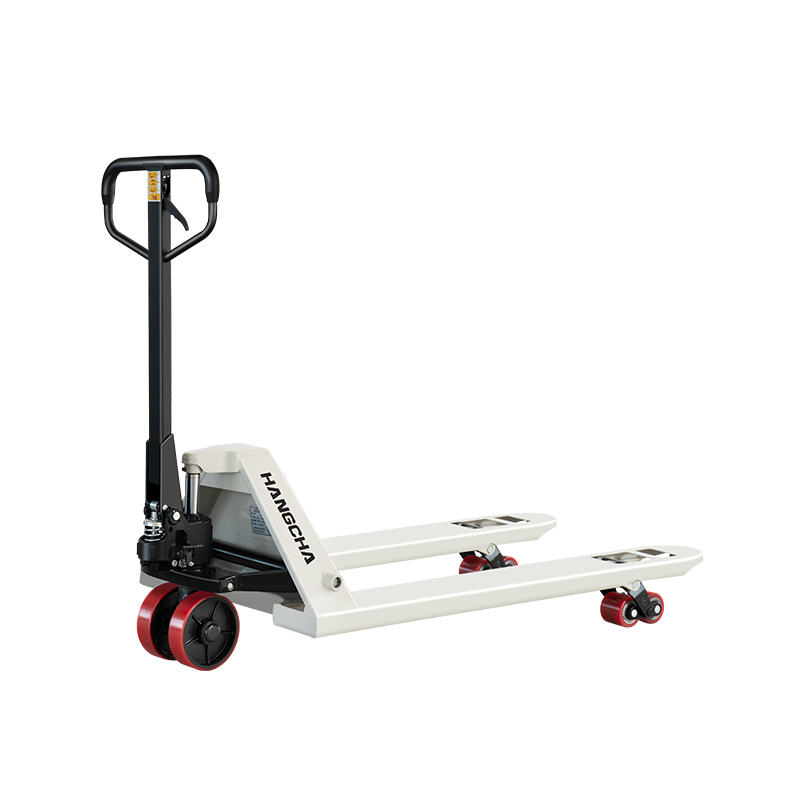
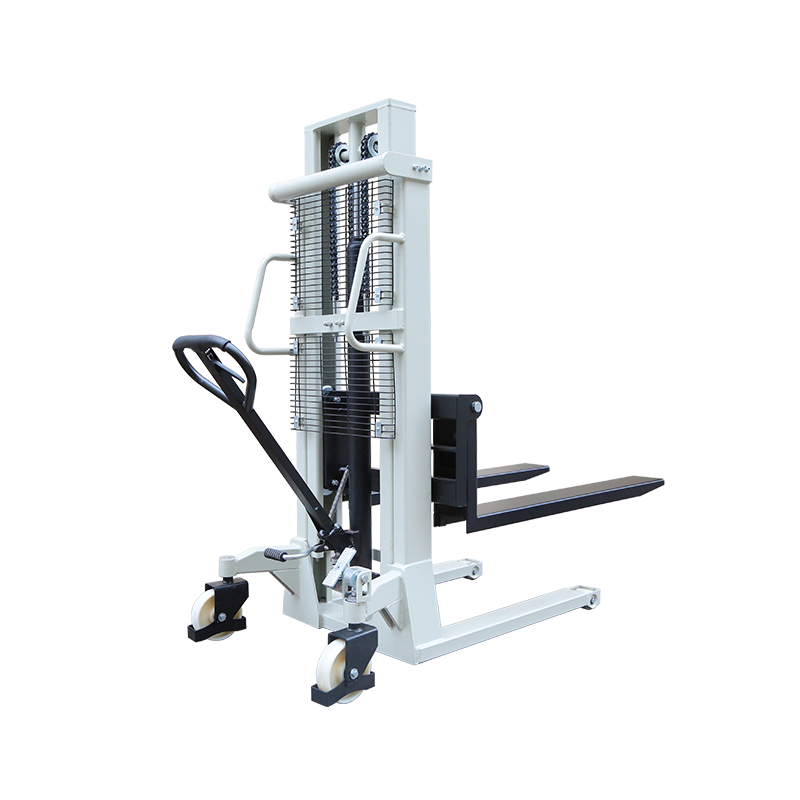
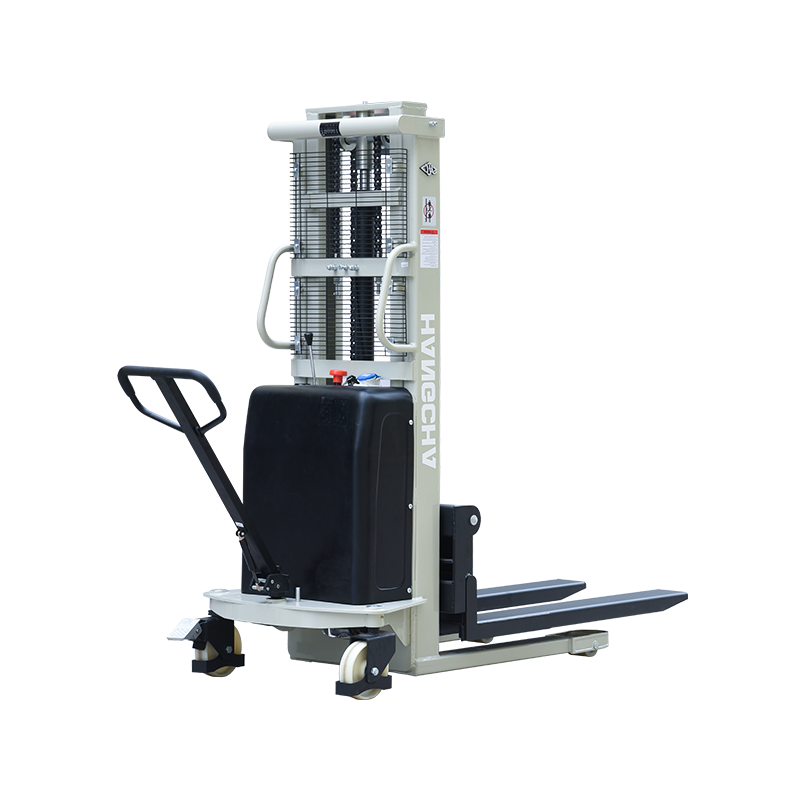
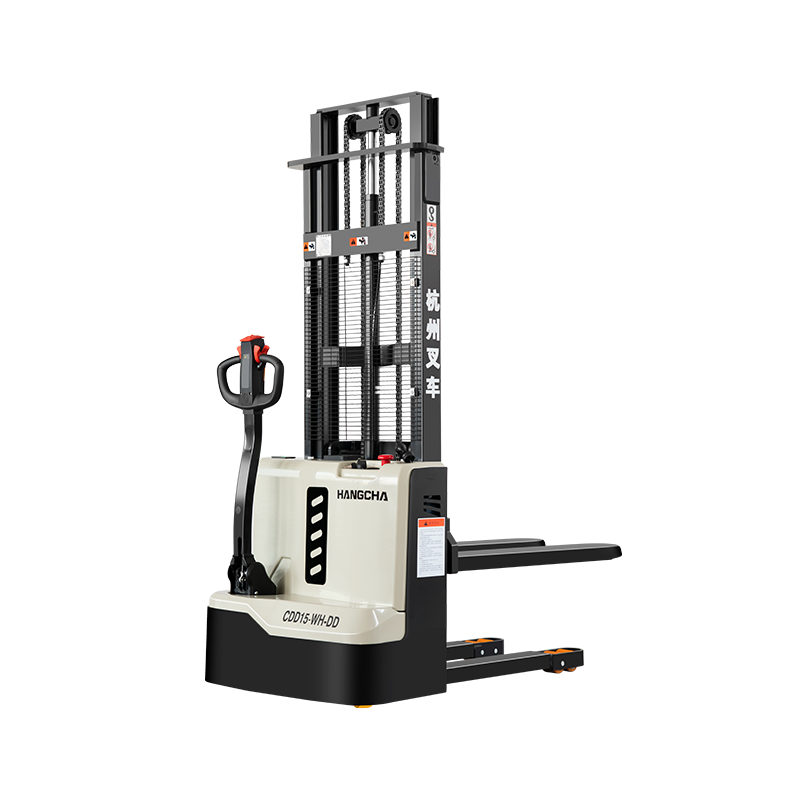
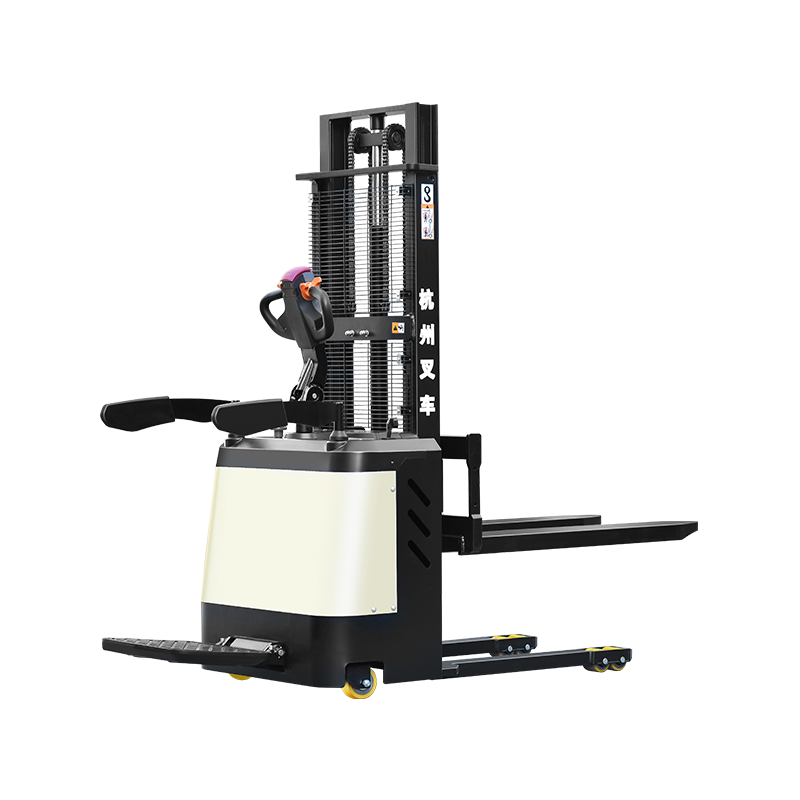
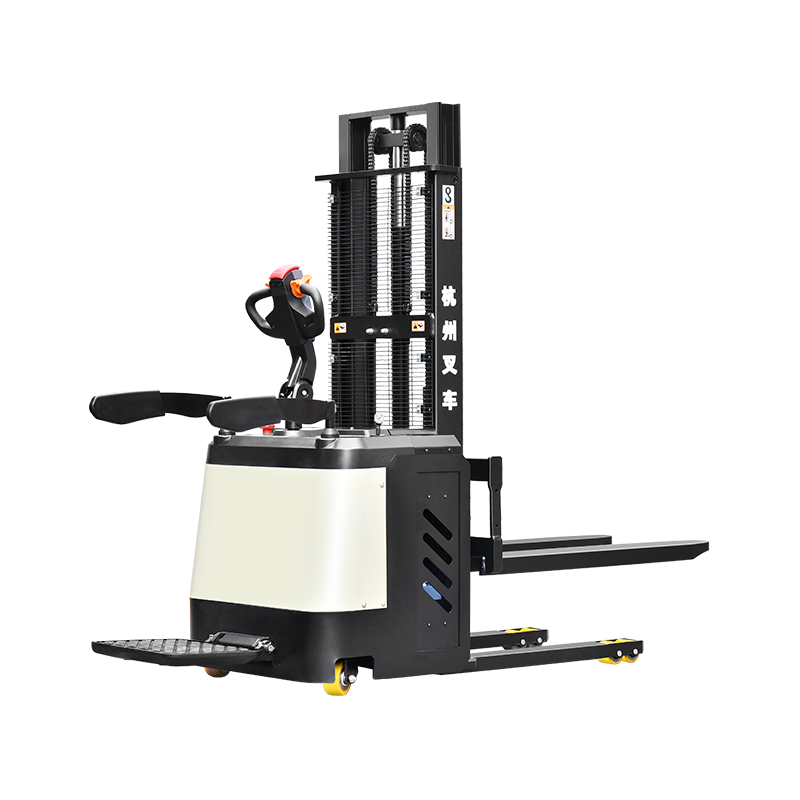
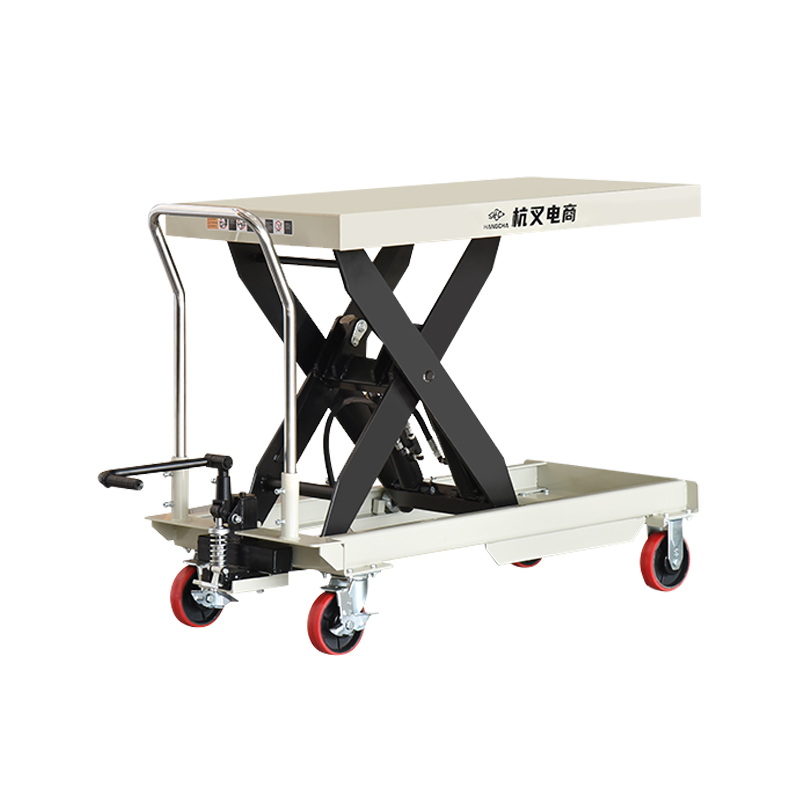
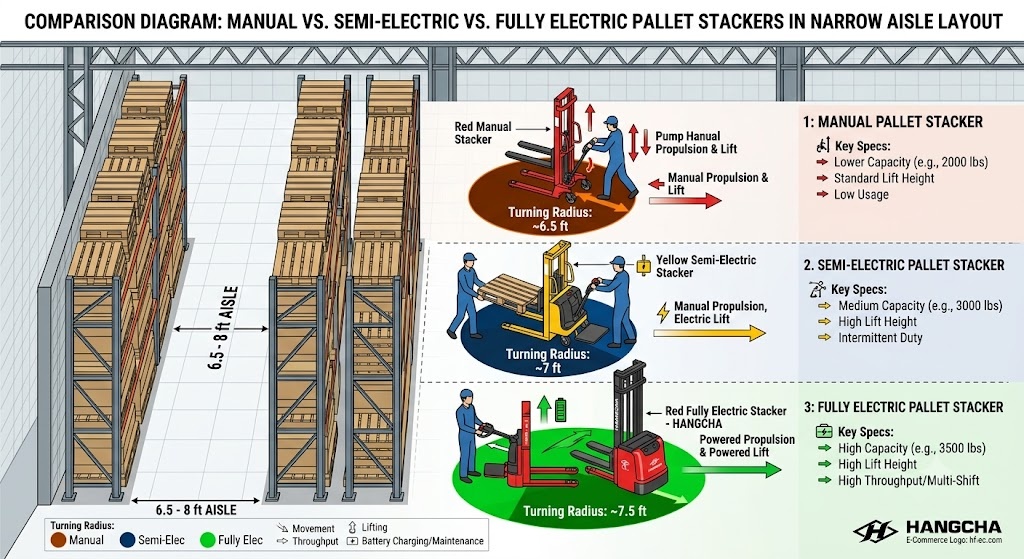
Pallet stackers are broadly categorized into three distinct operational tiers, each serving specific throughput volumes, duty cycles, and budgetary constraints. Understanding the nuances of these configurations ensures that facilities do not under-equip their staff or over-spend on unnecessary capabilities.
Operational environments dictate structural choices. In tight retail aisles or cold-storage facilities, fully electric units with compact chassis and specialized low-temperature hydraulic oil are mandatory. Furthermore, buyers must evaluate the mast mechanism: rigid single masts offer simplicity for low lifts, telescopic masts extend to double the lowered height for multi-tier racking, and triplex masts provide maximum lift with low clearance. A brief decision matrix reveals that if your daily pallet movement exceeds 25 cycles, or if you operate on hard, flat concrete floors with multi-tier racking, a fully electric solution yields the highest return on investment.
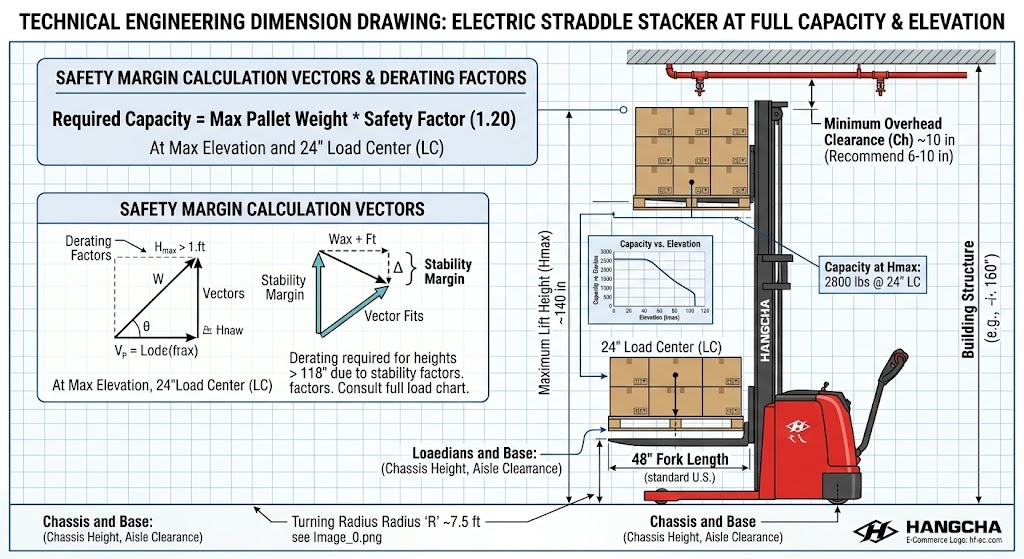
Selecting a pallet stacker requires translating raw technical numbers into executable operational rules. Specifying an inadequate machine compromises warehouse safety, while over-specifying wastes capital. The three foundational metrics to calculate are rated capacity, maximum lift height, and physical chassis dimensions.
Rated capacity must always account for the load center—the horizontal distance from the front face of the forks to the center of gravity of the load. For standard U.S. 48x40-inch pallets, the load center is typically 24 inches. It is crucial to understand that a stacker's lifting capacity derates (decreases) as the mast extends upward. To maintain a strict safety margin, standard industrial engineering practices recommend applying a safety factor multiplier to your heaviest anticipated load:
Required Capacity = Maximum Pallet Weight * Safety Factor (1.20)
For example, if your heaviest pallet weighs 2,500 lbs, your required rated capacity should be at least 3,000 lbs to guarantee stability at maximum elevation. Next, lift height must clear your top rack beam by at least 6 to 10 inches to allow operators to safely lift and deposit pallets without striking structural frames. Finally, physical constraints must be audited. Measure all facility bottlenecks, including structural doorways, overhead mezzanine clearances, mezzanine floor load limits, and ceiling obstructions like HVAC ducting and fire sprinkler systems.
Fork compatibility is equally vital. Standard U.S. wooden pallets require specific fork lengths (typically 42 to 48 inches) and adjustable overall fork widths (ranging from 21 to 27 inches) to ensure uniform weight distribution and prevent tipping during high-elevation maneuvers.
The U.S. material handling market features an array of configurations tailored to specific industrial sectors, from light commercial retail to heavy industrial manufacturing. Navigating equipment acquisition requires evaluating core specifications, expected lifespans, and direct financial acquisition models.
| Stacker Type & Model | Capacity Range (lbs) | Max Lift Height (in) | Est. Lifespan (Years) | Typical MSRP Range ($) | Best Use Case |
|---|---|---|---|---|---|
| Manual Hydraulic Eco | 1,000 - 2,000 | 60 - 98 | 3 - 5 | $800 - $1,500 | Small retail stockrooms, auto repair shops |
| Semi-Electric Intermediate | 2,000 - 3,000 | 98 - 138 | 4 - 6 | $2,500 - $4,500 | Light manufacturing staging, low-frequency docks |
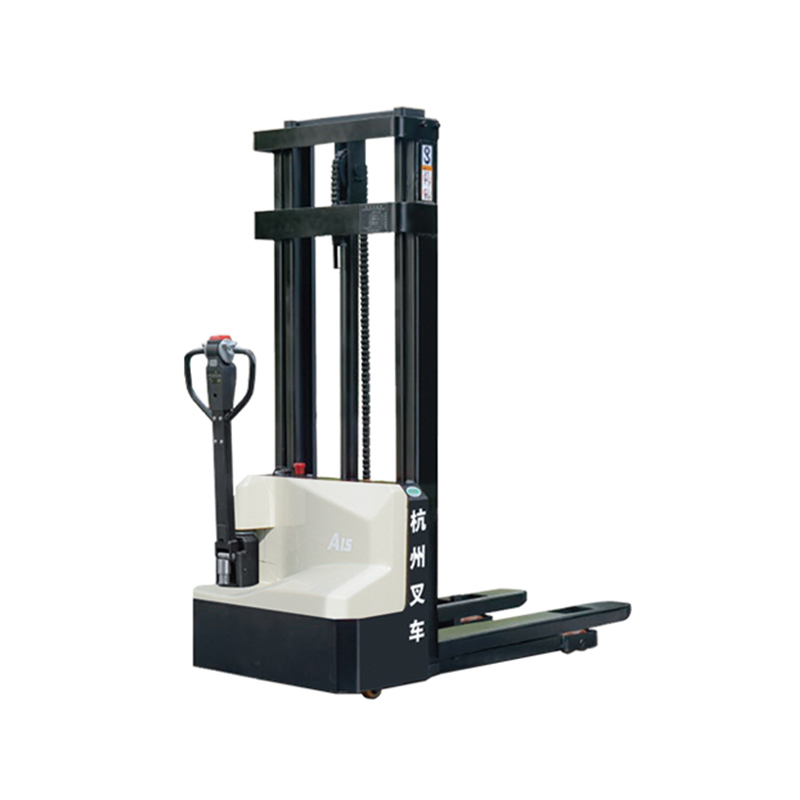
| Hangcha A Series Mini Lithium | 2,200 - 3,500 | 118 - 141 | 7 - 10+ | $4,500 - $7,500 | E-commerce fulfillment centers, narrow-aisle grocery |
| Heavy-Duty Industrial Walkie | 4,000 - 5,000 | 141 - 177 | 6 - 8 | $8,000 - $13,000 | Continuous multi-shift logistics, cold storage |
When procurement teams evaluate acquisition, procurement structure heavily skews long-term profitability. Outright purchasing grants full asset depreciation benefits but ties up liquid cash flow. Leasing or equipment financing structures (such as 36-to-60-month terms) allow warehouses to preserve working capital while securing modern, high-efficiency equipment. For highly seasonal businesses, such as third-party logistics (3PL) providers handling winter holiday rushes, short-term renting provides an agile mechanism to scale fleet capacity up or down without acquiring permanent overhead liabilities or risking capital on unverified used machinery with degraded battery cells.
Deploying material handling machinery within the United States binds an enterprise to strict safety mandates governed by the Occupational Safety and Health Administration (OSHA). Under federal regulation 29 CFR 1910.178, even walk-behind fully electric pallet stackers are legally classified as Class Lift Trucks, meaning all operators must complete formalized training, a practical evaluation, and an official certification process every three years.
To establish a bulletproof audit trail and shield operations from costly regulatory penalties, management must enforce mandatory daily pre-shift inspection checklists. A standard operational safety routine requires validating specific physical and mechanical states before power is applied:
Common operational hazards—such as traveling with an elevated load, executing sharp turns at high speeds, or failing to acknowledge warehouse floor gradients—are the leading causes of equipment tip-overs. By standardizing automated operator-assist technologies, such as the built-in cornering speed reduction and automatic anti-rollback braking found on Hangcha equipment, facilities can systematically reduce human error, ensure flawless regulatory compliance, and foster an incident-free working environment.
The purchase price of a pallet stacker represents a mere fraction of its Total Cost of Ownership (TCO) across a typical 5-to-10-year operational lifecycle. Ongoing preventive maintenance, immediate diagnostic troubleshooting, and battery power infrastructure represent the primary drivers of long-term equipment expenditures.
Conventional material handling fleets utilize Lead-Acid battery chemistry, which imposes severe operational constraints. Lead-acid batteries require rigid 8-hour charging cycles combined with 8-hour cooling periods, specialized ventilated charging rooms to exhaust hazardous gases, and weekly manual distilled water top-offs. Neglecting this maintenance drastically shortens battery lifespan, causing premature cell failure and expensive premature replacement costs. Conversely, Hangcha's industry-leading Lithium-Ion battery technology transforms warehouse economics:
To accurately calculate TCO and evaluate when a premium lithium-ion unit or structured service contract drives down costs, fleet managers can implement a standardized financial lifecycle tracking formula:
TCO = Purchase Price + Maintenance Costs + Scheduled Downtime Losses + Energy Costs - Residual Asset Value
By investing in smart lithium technology, companies dramatically reduce maintenance labor and energy costs while maximizing residual asset value, achieving an optimized TCO profile that significantly outpaces budget-tier alternatives.
Maximizing warehouse vertical storage efficiency while reducing overall lifecycle expenses requires professional operational matching. Hangzhou Hangcha E-Commerce Co., Ltd. provides direct, time-zone friendly access to expert material handling consultants across the United States. Whether your logistics setup requires a highly specialized technical quotation, an on-site facility evaluation, or an online video demonstration of our premium lithium-ion walkie stacker fleet, our dedicated support channels are fully available to assist your team.
Contact our distribution team directly via our digital consultation portal to utilize our rapid ROI calculation matrix, or call our US-based product line experts directly. Take the next definitive step toward transforming your material handling infrastructure today by scheduling a complimentary safety training consultation or requesting an immediate on-site trial unit demonstration tailored explicitly to your facility’s unique workflow parameters.
What is a pallet stacker and how is it different from a pallet jack or a forklift?
A pallet jack is limited exclusively to horizontal transport along the ground, whereas a pallet stacker features an integrated vertical mast designed to lift and stack pallets onto multi-tier warehouse racking systems. A forklift is a large, ride-on counterbalanced vehicle requiring wide operating aisles (typically 11 to 14 feet), while a pallet stacker is a compact pedestrian-operated machine capable of navigating tight, narrow aisles (typically 6 to 8 feet) at a fraction of the acquisition cost.
What is a stack of pallets called in warehouse terminology?
In standard warehouse logistics, an organized vertical collection of empty wooden or plastic pallets is formally referred to as a "pallet stack" or a "nested pallet pile." When loaded with heavy commercial inventory, a single vertical unit is traditionally designated as a "palletized load" or a "storage tier position."
How do I choose between a manual, semi-electric, and fully electric pallet stacker for a U.S. warehouse?
The selection criteria depend primarily on daily operational frequency, transport distance, and operator ergonomics. Manual units are reserved for minimal backroom duty (fewer than 10 lifts per day). Semi-electric models balance low costs with powered lifting for medium duty cycles where physical pulling distances are minimal. Fully electric walkie stackers are mandatory for high-velocity distribution centers, multi-shift operations, heavy loads, and long transport paths where operator fatigue must be minimized.
What lift capacity and maximum lift height do I need for common pallet types and multi-tier racking?
To determine your requirements, record the weight of your heaviest loaded pallet and multiply it by a 1.20 engineering safety factor to establish your required rated capacity at the standard 24-inch load center. To determine lift height, measure the exact vertical distance from the floor to the top surface of your highest storage rack beam and add a minimum of 6 to 10 inches of operational clearance to prevent racking collision damage.
Can pallet stackers operate in narrow-aisle or cold-storage environments, and what features should I look for?
Yes, compact walkie stackers are explicitly engineered to thrive in narrow-aisle environments down to 78 inches of clearance. For refrigerated warehouses or deep-freeze cold storage, you must specify a unit equipped with a cold-protection package. This structural enhancement includes low-viscosity hydraulic oil to prevent pump freezing, waterproof electrical enclosures to protect circuitry against condensation, and specialized anti-corrosion chassis coatings.
Is it better to buy, lease, or rent a pallet stacker for seasonal peaks, and how should I decide?
Buying provides maximum long-term financial ROI and asset equity for consistent year-round production. Leasing or equipment financing structures preserve liquid cash flow and facilitate regular technology upgrades every 3 to 5 years. Renting is the ideal tactical solution for sudden seasonal demand spikes or temporary contract fulfillment, enabling warehouses to inject immediate operational capacity without assuming heavy long-term capital liabilities.
What routine maintenance and battery-care schedule will extend a pallet stacker’s life and reduce total cost of ownership?
Extending equipment lifespan requires conducting daily pre-shift structural inspections, performing monthly chassis lubrication and hydraulic level checks, and scheduling professional annual mast structural stress testing. For traditional lead-acid batteries, strict adherence to manual watering schedules and designated 8-hour cooling phases is required. Upgrading to advanced maintenance-free lithium-ion technology completely eliminates battery watering schedules, allows for rapid opportunity charging, and decreases overall TCO by up to 40% through enhanced efficiency.

+86-0571-88131206

+86-19084200370

+86-17816721301
 عربى
عربى