What gives a forklift its muscle? It all comes down to the motor.
The motor is the absolute heart of the machine, converting stored energy (either electricity or fuel) into the massive torque and power needed to lift thousands of pounds and navigate busy aisles. Without the right motor, a forklift is just a big metal frame.
We’ll break down the pros and cons of electric motors (DC, AC, and BLDC) and internal combustion engines (Gasoline, LPG, and Diesel) so you can understand the true power—and cost—behind the lift.
Forklifts generally fall into two main camps based on how they get their power: Electric and Internal Combustion (IC). The work they do is similar, but the technology, maintenance, and operating environment required for each are vastly different.
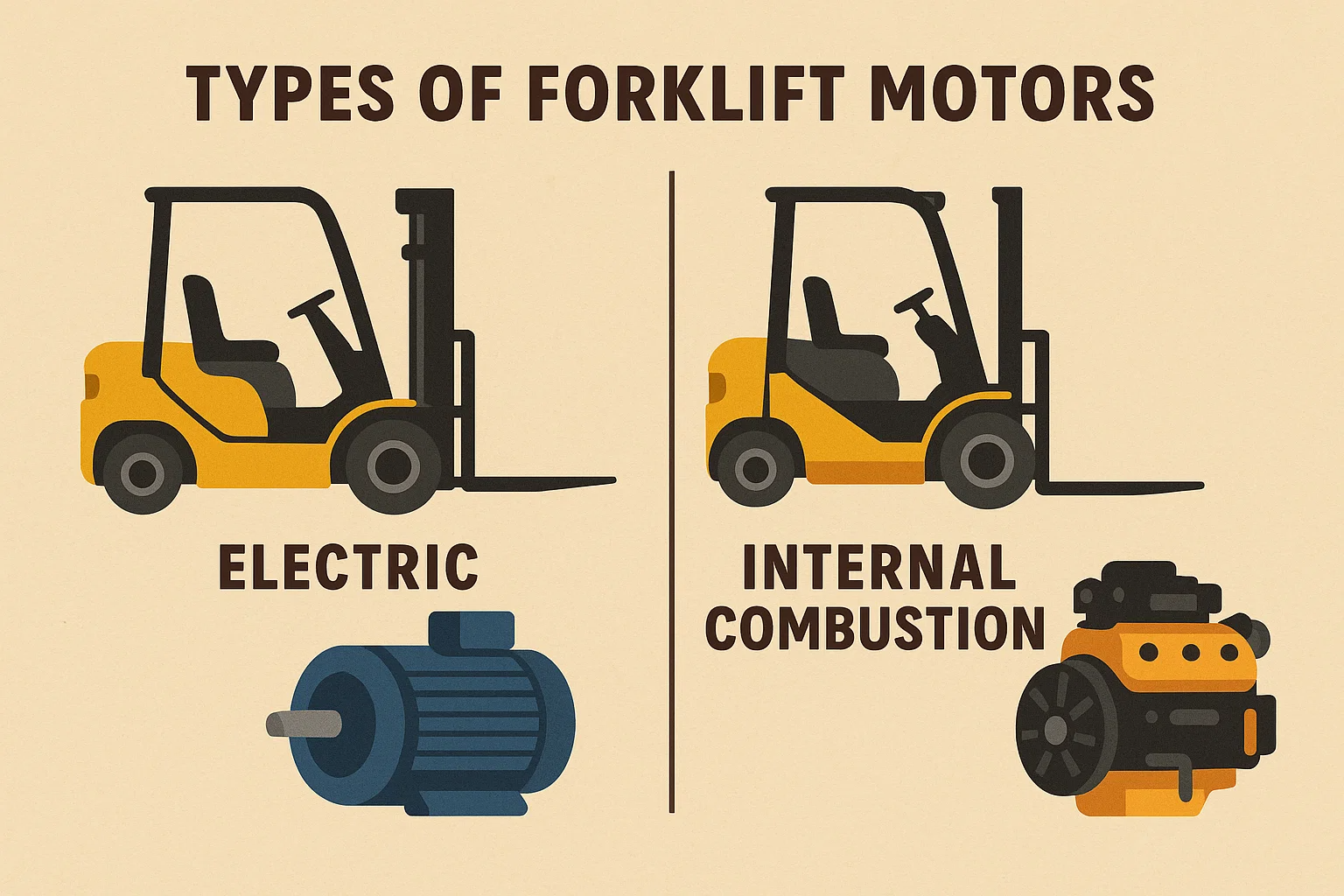
Electric forklifts are the standard for indoor, clean operations. They run on rechargeable industrial batteries, which supply power to one or more electric motors. Modern electric motors are incredibly powerful, clean, and increasingly efficient.
DC motors were the original workhorse of the electric forklift world. They convert electricity into mechanical motion using a system of brushes and a commutator.
How They Work: Power is fed to an armature via carbon brushes that slide along a commutator.
Advantages: They offer exceptionally high starting torque, which is great for quickly picking up a heavy load from a dead stop, and their speed is easily controlled.
Disadvantages: Because of the physical contact between the brushes and the commutator, they experience friction and wear, which leads to higher maintenance (replacing brushes) and slightly lower efficiency than their AC counterparts. They are now considered older technology.
AC induction motors have become the dominant technology in modern electric forklifts. They are rugged, highly efficient, and have fundamentally changed the maintenance landscape.
How They Work: They use the principle of electromagnetic induction to generate rotary motion, meaning there are no physical contact parts (no brushes).
Advantages: Lower maintenance (no brushes to replace), higher efficiency (converting more battery power into usable work), and a significantly longer lifespan. They are also better at regenerative braking, which helps recharge the battery.
Disadvantages: They require a more complex electronic control system (known as a Variable Frequency Drive or VFD), which can make the initial purchase price higher.
A close cousin to the AC motor, BLDC technology is another option for high-end applications, especially for smaller or specialized forklifts.
How They Work: Like AC motors, they use electronic commutation rather than physical brushes. They are essentially permanent magnet synchronous AC motors run on a DC power source.
Advantages: They boast very high efficiency and excellent power density (meaning more power for their size). They are also low-maintenance and offer a long service life.
Disadvantages: The highest initial cost of the three electric motor types due to the sophisticated control electronics required to run them.
For high-capacity lifting, outdoor use, or applications that require nonstop, multi-shift operation without waiting for a battery charge, Internal Combustion (IC) engines are the go-to power source. These engines work just like those in cars and trucks, generating power by burning fuel within cylinders.
Gasoline forklifts are common and reliable, often used for lighter-duty outdoor or well-ventilated indoor tasks.
How They Work: They run on readily available gasoline, using spark plugs to ignite the air-fuel mixture.
Advantages: Readily available fuel supply (easy to refuel), good overall power output, and generally a lower initial cost compared to diesel or modern electric models.
Disadvantages: They produce higher levels of regulated emissions (carbon monoxide, hydrocarbons) than LPG or diesel, making them unsuitable for most indoor environments. They also tend to have higher fuel costs than their LPG or diesel counterparts.
LPG forklifts are extremely popular because they offer a great balance of power and cleaner emissions, allowing them to bridge the gap between indoor and outdoor operations.
How They Work: The engine runs on propane (LPG), stored in a pressurized tank mounted on the rear of the truck. This fuel burns cleaner than gasoline.
Advantages: Significantly lower emissions than gasoline, making them acceptable for use in large, well-ventilated warehouses or when transitioning frequently between indoor and outdoor work. They offer excellent, consistent power output.
Disadvantages: Requires specific LPG refueling infrastructure (on-site tank storage or cylinder exchange). If the price of propane rises, fuel costs can be volatile.
When the job involves heavy loads, rough terrain, or extended outdoor use, diesel engines are the undisputed king.
How They Work: Diesel engines ignite the fuel using compression, not a spark plug, which contributes to their extreme torque and efficiency.
Advantages: Unmatched high torque for heavy lifting and climbing, best-in-class fuel efficiency (using less fuel to do more work), and incredible long lifespan under strenuous conditions.
Disadvantages: Higher levels of particulate matter and nitrogen oxides (emissions) require advanced filtering systems (especially in newer models). They are the noisiest engine type, and have a higher initial purchase price than gasoline or LPG models.
Selecting the right forklift motor is one of the most critical decisions a facility manager makes. It's not just about what is powerful; it's about what is cost-effective and compliant for your specific needs. Here are the main factors to weigh:
Indoor vs. Outdoor Use: Electric forklifts are a must for indoor food handling or tight-space operations due to zero emissions. IC engines, particularly diesel, are best for construction yards or shipping ports.
Load Capacity: Heavy-duty applications (over 15,000 lbs) almost always require the high torque of a Diesel engine. Lighter-to-medium loads are easily handled by modern electric or LPG models.
Operating Surface: For smooth warehouse floors, electric power is perfect. For rough, uneven outdoor terrain, the robust build and power of an IC engine are necessary.
Environmental Regulations: Strict air quality standards (local or federal) often mandate the use of electric or highly regulated, low-emission LPG/Diesel engines.
Horsepower and Torque: Torque is the rotational force—the raw pulling and lifting strength—and is key for lifting heavy objects. Horsepower is the speed at which that torque can be generated. For quick acceleration and high-speed travel, horsepower matters; for lifting and climbing, torque is king.
Voltage and Current (Electric): Electric motors have specific voltage (24V, 36V, 48V, etc.) and current requirements that must match the battery system and control electronics. Higher voltage generally means more power and efficiency.
Energy Consumption: This is where electric forklifts shine. While the initial cost is higher, the cost per hour of operation (charging the battery) is significantly lower than purchasing and consuming fossil fuels.
Fuel Consumption (IC): Diesel engines are the most fuel-efficient of the IC types, consuming less fuel per job than gasoline or LPG.
Maintenance Costs: The lack of spark plugs, oil, filters, and coolant means AC electric motors have the lowest long-term maintenance costs. Brushed DC motors and all IC engines require more frequent, scheduled maintenance
To help summarize the choice, here is a quick comparison of the major trade-offs between electric and internal combustion power:
| Advantages | Disadvantages |
| Quiet Operation: Minimal noise, creating a safer, more pleasant working environment. | Limited Runtime: Battery capacity dictates shift length, requiring charging breaks. |
| Zero Emissions: Ideal for indoor food, pharma, or sensitive environments. | Longer Refueling/Recharge Times: Charging can take several hours, though battery swapping helps. |
| Lower Operating Costs: Electricity is generally cheaper than fuel, especially for AC models with low maintenance. | Higher Initial Cost: The purchase price of a new electric forklift is often higher than a comparable IC model. |
| Instant Torque: Electric motors deliver maximum torque immediately, offering excellent acceleration. | Battery Maintenance: Requires consistent charging protocols and potential costs for battery replacement over the lifespan of the truck. |
IC Engines (Gasoline, LPG, Diesel)
| Advantages | Disadvantages |
| Longer Runtime: Can operate continuously; limited only by the size of the fuel tank. | Higher Emissions: Produce pollutants (CO, NOx, particulates), restricting indoor use. |
| Faster Refueling: Refilling a tank with fuel or swapping an LPG cylinder takes minutes, not hours. | Noisy Operation: Creates significant noise pollution, which requires hearing protection in some facilities. |
| Lower Initial Cost: Generally cheaper to purchase upfront than an equivalent electric model. | Higher Operating Costs: Fuel is a major ongoing expense, and engines require more complex scheduled maintenance (oil, filters, etc.). |
| Unmatched Power: Diesel engines provide the best sustained power and high torque for the heaviest loads. | Requires Ventilation: Even LPG models require proper air flow to avoid hazardous gas buildup. |
Motor maintenance is directly tied to the lifespan and efficiency of your forklift fleet. Ignoring scheduled checks—whether it's battery watering or an oil change—will lead to costly breakdown and downtime.
The goal of electric motor maintenance is to protect the power source and the motor's internal components.
Regular Battery Maintenance: This is the most crucial task. For traditional lead-acid batteries, ensure proper charging protocols are followed (avoiding over- or under-charging) and that the distilled water levels are checked and maintained. Keep battery terminals clean and free of corrosion.
Checking Motor Brushes (for DC Motors): Since DC motors rely on physical contact, brushes must be inspected regularly for wear and replaced before they damage the commutator. (Note: AC and BLDC motors eliminate this chore!)
Inspecting Wiring and Connections: Regularly check all high-voltage cables, connections, and contactors. Loose wiring can cause arcing, overheating, and loss of power.
IC engines require a predictable, automotive-style maintenance schedule.
Regular Oil Changes: Use the manufacturer's recommended oil grade and change the oil and oil filter at the prescribed intervals (typically every 250 to 500 operating hours) to minimize engine wear.
Checking and Replacing Filters: Air filters must be kept clean to ensure optimal air intake, fuel efficiency, and to keep debris out of the engine. Fuel filters prevent contaminants from reaching the injectors or carburetor.
Inspecting Spark Plugs (Gasoline and LPG Engines): Clean or replace spark plugs as needed to ensure reliable starting and proper combustion. Fouled plugs reduce power and increase fuel consumption.
Checking Coolant Levels: Maintaining the correct coolant level is essential to prevent engine overheating, which is a major cause of IC engine failure.
Cleanliness: Always keep the engine or motor compartment clean and free of dirt, dust, and debris. This helps prevent overheating and makes identifying leaks or wear and tear easier.
Following Manufacturer’s Schedule: The single best maintenance tip is to adhere strictly to the manufacturer's recommended maintenance schedule. These schedules are based on thousands of operating hours and are designed to maximize the life of the engine.
While many major forklift brands design and manufacture their own proprietary engines and motors, the industry also relies on specialized engine and component suppliers. The name on the hood often represents the quality of the motor underneath.
These companies often build their own engines and have massive R&D budgets dedicated to power unit design:
Toyota Material Handling: The global market leader, known for building its own extremely reliable IC engines (like the famous Toyota 4Y series) and for heavily investing in advanced AC electric motors and lithium-ion battery technology.
KION Group (Linde, STILL): A European giant known particularly for its high-efficiency electric forklifts. Linde is often credited with pioneering advanced hydrostatic drives and efficient motor controls.
Crown Equipment Corporation: Known for manufacturing up to 85% of its own lift truck components, including high-quality AC motors, electronic modules, and drive units, giving them tight control over quality and performance.
Hyster-Yale Materials Handling: A globally integrated manufacturer using a mix of proprietary and high-quality outsourced engines. They frequently use dependable suppliers like Cummins for larger diesel applications and GM or Mazda for heart-of-the-line LPG/Gas engines.
Mitsubishi Logisnext (Mitsubishi, Cat, Jungheinrich [NA]): A major global player that utilizes recognized engine brands like the Nissan K21 and K25 in many of its heart-of-the-line LPG and gasoline models.
These companies may not sell forklifts, but their engines power the industry:
General Electric / Siemens: Major suppliers of high-performance electric motors, particularly AC and brushless systems, used by many global forklift manufacturers.
Nissan / Kubota / Yanmar: Trusted manufacturers of compact, durable IC engines frequently used in mid-sized LPG and diesel forklifts worldwide.
Specialized Electric Motor Rebuilders (e.g., Warfield Electric): These companies play a crucial role in fleet maintenance, providing high-quality remanufactured electric motors that meet or exceed OEM specifications, offering a cost-effective alternative to new units.
The motor truly is the core of any forklift, dictating everything from hourly operating cost to where the machine can legally operate.
The material handling world is experiencing a clear trend toward electrification, driven by stricter emissions standards, significant improvements in battery technology, and the maintenance simplicity of modern AC motors. However, for demanding, high-capacity, or continuous outdoor work, the robust power and fast refueling of a Diesel or LPG engine remain indispensable.
Ultimately, the "best" forklift motor is the one that perfectly aligns with your specific operational needs. By balancing the upfront cost with long-term factors like fuel efficiency, required maintenance, and operating environment, you can ensure your fleet is powered for maximum productivity today and well into the future.
What type of motor is best for indoor use? AC Electric Motors are best for indoor use. They produce zero local emissions, operate quietly, and require very little scheduled maintenance, making them ideal for confined spaces, food storage, and clean operations.
What are the advantages of electric forklifts? Key advantages include zero emissions, quiet operation, lower operating costs (due to cheaper energy and less maintenance), and instant, high torque for lift-off and acceleration.
How often should I maintain my forklift motor? Maintenance schedules vary significantly. Electric AC Motors require minimal maintenance, focusing on the battery and electronics. IC Engines (Gas, LPG, Diesel) typically require oil, filter, and fluid checks every 250 to 500 operating hours. Always follow the manufacturer's recommended schedule.
What are the signs of a failing forklift motor? For Electric Motors, signs include sluggish performance, excessive heat from the motor compartment, or the battery draining much faster than normal. For IC Engines, signs include excessive smoke (blue for oil, black for fuel), unusual knocking sounds, difficulty starting, or significant loss of horsepower or torque.
Can I convert an IC forklift to electric? While technically possible, converting a traditional IC forklift to electric is rarely done due to the cost and complexity. It typically involves removing the engine, fuel system, and transmission and installing an entire electric drive train, including the motor, high-voltage control system, and a heavy battery. It is almost always more cost-effective to purchase a new or used electric forklift.

+86-0571-88131206

+86-19084200370

+86-17816721301
 عربى
عربى