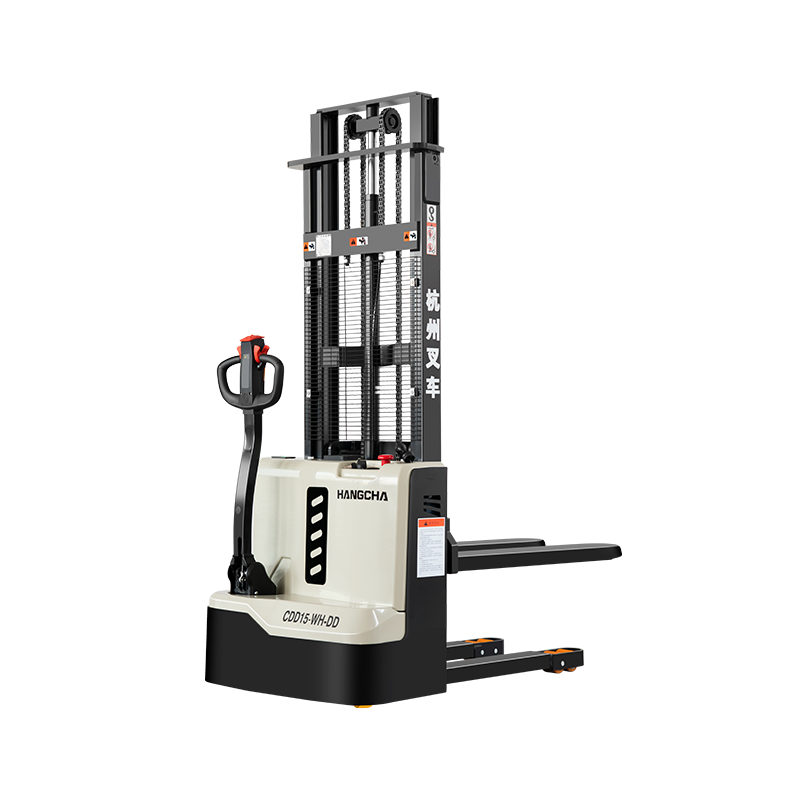
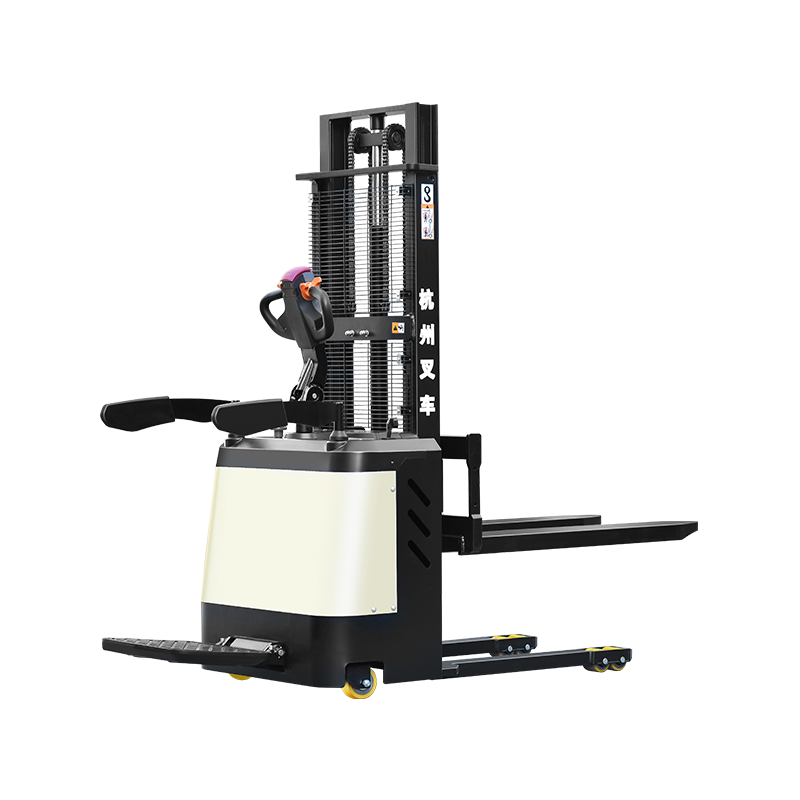
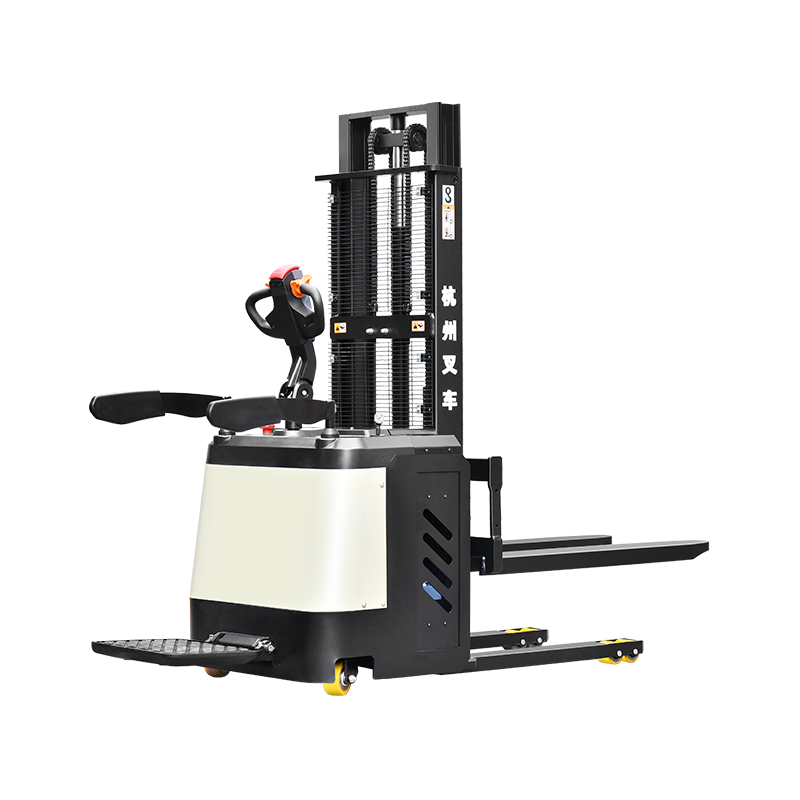
Pharmaceutical warehouses impose four layers of forklift requirements beyond standard OSHA rules: equipment classification (EX/ATEX rating in hazardous zones), contamination control (material, finish, and exhaust standards), temperature zone compatibility (cold chain and cryogenic areas), and documentation (equipment qualification, cleaning logs, operator training records auditable by FDA/EMA inspectors). Diesel and LPG forklifts are typically prohibited inside finished-goods areas. Electric forklifts - specifically stainless-steel or epoxy-coated models - are the baseline standard.
21 CFR
211 / 205.50
US FDA core warehouse regulations
EU GDP
2013/C 343/01
EU Good Distribution Practice - equipment must be "suitable and qualified"
500,000
EUR max fine
EU GDP violation penalty - 40% more inspections expected in 2026
155+
FDA 483 obs.
Environmental monitoring deficiencies found in a single cross-industry FDA review
1. Why Pharmaceutical Warehouses Are Different
In a standard warehouse, the forklift is a productivity tool. In a pharmaceutical warehouse, it is regulated equipment - subject to qualification, cleaning validation, and documentation requirements that have nothing to do with OSHA and everything to do with product integrity.
The governing frameworks are layered and region-specific:
Framework
Region
Key Instrument
Relevance to Forklifts
FDA cGMP
USA
21 CFR Part 211 (drug GMP); 21 CFR Part 205.50 (wholesale drug warehouse)
Facilities and equipment must not contaminate product; cleaning and maintenance records required
EU GDP
EU / EEA
Guidelines 2013/C 343/01 (EudraLex Vol. 4)
Equipment must be "suitable for its intended use" and not adversely affect product quality; qualification documentation required
WHO GDP / GTDP
Global reference
WHO TRS 1025 Annex 7 (GDP); IPEC Europe GDP Guide v3 (2024)
Equipment qualification, cleaning validation, traceability throughout handling chain
ATEX / IECEx
EU (ATEX); Global (IECEx)
ATEX Directive 2014/34/EU; IECEx System
Mandatory for forklifts operating in hazardous zones (solvent storage, API production, powder milling)
NEC / OSHA (US)
USA
29 CFR 1910.178 truck designations (EX, EE, ES classes)
Truck type must match area hazard classification - EX-rated trucks required in classified areas
The critical insight: OSHA compliance is necessary but not sufficient. A forklift that meets all OSHA requirements can still fail an FDA or EMA inspection if it lacks qualification documentation, leaves contamination risk, or operates in a temperature zone it was not validated for.
2. Zone Classification: Matching the Truck to the Area
The single most important forklift decision in a pharmaceutical facility is matching the truck type to the hazard zone. Getting this wrong is not a documentation issue - it is a potential explosion risk and an immediate regulatory shutdown trigger.
Hazardous Zones in Pharmaceutical Facilities
Zone (EU/IEC)
US NEC Equivalent
Hazard Description
Typical Pharma Location
Required ATEX Cat.
Zone 0 / Zone 20
Class I/II Div. 1
Explosive gas or dust present continuously or for long periods
Explosive atmosphere likely during normal operation
API synthesis areas, ethanol granulation, solvent storage rooms, powder milling
Category 2 ATEX certified forklift required
Zone 2 / Zone 22
Class I/II Div. 2
Explosive atmosphere unlikely but possible under abnormal conditions
Packaging areas near solvents, ancillary areas adjacent to Zone 1
Category 3 ATEX - lower-spec EX trucks permitted
Non-classified
General purpose
No explosive atmosphere under normal or abnormal conditions
Finished goods warehouses, dispatch areas, general storage
Standard electric forklift - must still meet GMP contamination requirements
Critical: Many pharma facilities contain both classified and non-classified zones in the same building. A forklift certified only for general areas cannot enter a Zone 1 solvent storage corridor - even briefly. Zone boundary mapping must be documented, and forklift routing SOPs must enforce the boundaries. Mixed-zone facilities typically maintain separate dedicated fleets per zone, since ATEX conversions cannot be reversed.
What ATEX Certification Actually Means for a Forklift
An ATEX-certified forklift is not simply a standard electric truck with extra labeling. The certification process addresses every potential ignition source on the vehicle:
Electrical systems: All motors, contactors, and wiring are enclosed in explosion-proof housings (Ex d) or use increased-safety construction (Ex e) - no sparking under normal or fault conditions
Battery: Sealed or specially vented; no hydrogen off-gassing in hazardous areas; LFP chemistry preferred for lower thermal runaway risk. Stoecklin's LiTEx battery is an example of a purpose-built ATEX Li-ion solution
Braking system: Regenerative braking preferred; friction brakes must not generate surface temperatures exceeding the T-class rating of the zone
Surface temperature: All external surfaces must stay below the auto-ignition temperature of the target substance (T-class, e.g., T4 = max 135 deg C surface temperature)
Attachments: Every attachment (side-shifter, drum tipper, clamp) must carry its own ATEX certificate - a certified truck with a non-certified attachment is non-compliant
3. Contamination Control: Materials, Finishes, and Exhaust
Even in non-classified finished-goods areas, pharmaceutical GMP imposes requirements that standard industrial forklifts do not meet by default. The concern is cross-contamination: particles, lubricants, or exhaust gases reaching open product or product-contact surfaces.
Power Type Requirements by Area
Area Type
Diesel / LPG
Standard Electric
GMP-Spec Electric
ATEX Electric
Outdoor / loading dock
Permitted
Permitted
Permitted
Permitted
Finished goods warehouse (sealed packaging)
Prohibited (exhaust contamination)
Conditional - may need GMP upgrade
Standard
Overkill but permitted
Open / semi-open product handling
Prohibited
Prohibited
Required minimum
Required if hazardous zone
API synthesis / solvent storage (Zone 1)
Prohibited
Prohibited
Prohibited
Required (Cat. 2)
Controlled temperature (CRT, 15-25 deg C)
Prohibited indoors
Conditional
Standard
If zone-classified
Cold storage (2-8 deg C)
Prohibited
Requires cold-rated battery/components
Required - cold-spec version
ATEX + cold-rated
Freezer storage (-20 deg C)
Prohibited
Not suitable - hydraulic fluid freezes
Freezer-rated spec required
Freezer-rated ATEX
GMP-Spec Forklift: What the Specification Covers
A "GMP-spec" electric forklift is not a catalog option - it is a specification checklist that procurement and QA define together. Core requirements typically include:
Body material: 304 brushed stainless steel or white epoxy-coated steel on all surfaces that may contact product or product-contact surfaces; no exposed carbon steel that can rust and shed particles
Lubrication: Food-grade or pharmaceutical-grade lubricants on all accessible lube points; standard mineral grease is a contamination risk
Hydraulic fluid: Food-safe hydraulic oil (e.g. H1-rated) to prevent contamination from hydraulic leaks
Cleanability: IP65 minimum rating on electrical enclosures; smooth surfaces with no dead-end cavities where microorganisms or particles can accumulate; drain holes or sloped surfaces where washdown is used
Tires: Non-marking, non-shedding compound; standard black carbon-reinforced tires leave black marks and shed particles
Fork coating: Smooth epoxy or stainless finish; standard raw steel forks corrode and shed scale
No combustion exhaust: Any combustion-powered truck is excluded from product areas, regardless of ventilation
Cleanroom vs. controlled warehouse: Full cleanroom forklifts (ISO Class 5-7) require additional measures - sealed bearing assemblies, HEPA-compatible shrouding, antistatic tires, and documented particle-generation testing. These are specialized vehicles with a much smaller supply base. Most pharmaceutical warehouses operate at a lower classification (controlled, not cleanroom) and require GMP-spec rather than true cleanroom specification.
4. Cold Chain Requirements: Temperature Zone Compatibility
Pharmaceutical cold chain is one of the most heavily regulated segments of the industry. EU GDP guidelines (2013/C 343/01) and WHO TRS 961 Annex 9 both require that equipment used in cold chain storage be validated and documented - including the forklifts that operate in and transition between temperature zones.
Temperature Zone Standards for Pharmaceutical Storage
Zone
Temperature Range
Typical Product
Forklift Requirements
CRT (Controlled Room Temperature)
15-25 deg C
Most oral solids, many APIs
Standard electric GMP-spec; no thermal modification needed
Refrigerated (CCT)
2-8 deg C
Biologics, vaccines, insulin
Cold-rated hydraulic fluid; battery heating system or dedicated cold-spec battery; seals rated for sustained cold; condensation management on electronics
Freezer
-20 deg C
Frozen biologics, plasma, some vaccines
Purpose-built freezer truck: synthetic hydraulic fluid rated to -40 deg C, insulated cab, battery with active thermal management, heated display and controls
Deep Freeze / Cryogenic
-70 deg C or below
mRNA vaccines, cell therapies, certain gene therapy products
Specialized cryogenic-compatible trucks; very limited supply base; often manual handling or custom automated systems at these extremes
The Transition Zone Problem
The most overlooked cold chain issue is not what happens inside a cold zone - it is what happens when a forklift moves between zones. A truck going from a 2-8 deg C cold room to a 20 deg C ambient area undergoes rapid thermal change. Problems that arise:
Condensation on electronics: Moisture entering control panels during warm-up cycles causes corrosion and short-circuit risk over time
Product exposure time: Every second a cold-chain product spends outside its validated zone is a GDP deviation requiring documentation. Forklift cycle times in transition areas must be measured and justified in SOPs
Battery performance drop: Lead-acid batteries lose 20-30% capacity at 0 deg C. LFP Li-ion loses less but still requires thermal management below -10 deg C. A battery that dies mid-cycle inside a cold room is both a safety and a product integrity issue
Hydraulic sluggishness: Standard hydraulic fluid thickens rapidly below 0 deg C, causing slow mast response or complete hydraulic failure at -20 deg C
GDP implication: EU GDP and WHO guidelines require that temperature excursions - including those caused by equipment entering and leaving cold zones - be documented with impact assessments. If your forklift SOP does not specify maximum time-in-transition and require documentation of each cold zone entry, you are creating inspection vulnerability.
5. Equipment Qualification: The GMP Documentation Layer
This is where pharmaceutical warehouse management diverges most sharply from standard industrial practice. Under GMP, equipment used in product-adjacent operations must be qualified - a formal documented process demonstrating the equipment is suitable for its intended use and performs consistently.
For forklifts, qualification typically follows the IQ/OQ/PQ framework used for all GMP equipment:
Phase
Name
What It Demonstrates
Forklift-Specific Examples
IQ
Installation Qualification
Equipment is installed correctly, as specified, and documented
Equipment operates within defined parameters across its operating range
Testing lift speed, load capacity at rated height, hydraulic response in cold zone, battery run-time at minimum charge temperature
PQ
Performance Qualification
Equipment consistently performs under actual production conditions
Documented pallet cycles in real cold-chain workflow; confirming no temperature excursions caused by equipment; particle count verification in controlled areas
Ongoing Documentation Requirements
Qualification is a one-time event at installation. Ongoing GMP compliance requires a continuing documentation system:
Preventive maintenance records: Scheduled at manufacturer-recommended intervals; every service event documented with date, technician, parts replaced, and sign-off. "We maintain it" is not acceptable - the record must exist and be retrievable
Cleaning logs: Each cleaning event documented per the validated cleaning SOP; cleaner identity, method, product used, and date. Frequency defined by risk assessment (product type, open/closed product exposure, zone classification)
Calibration records: Any measuring or monitoring functions on the forklift (load cells, temperature sensors on cold-zone trucks) must be calibrated on a documented schedule traceable to national standards
Deviation records: Any incident affecting product integrity - hydraulic leak, battery failure in cold zone, truck entering wrong area - must be captured as a GMP deviation with impact assessment and CAPA
Operator training records: GMP-specific training (not just OSHA certification) is required; operators must understand contamination risk, zone restrictions, and deviation reporting obligations
Change control: Any modification to the forklift - new attachment, lubricant change, software update - triggers a change control process and may require requalification
FDA Form 483 insight: A cross-industry review of FDA warehouse inspections identified more than 155 environmental monitoring deficiencies. Many were not caused by missing SOPs - they arose because equipment records did not align with physical inventory, or because cleaning logs existed but were not followed in practice. The gap between written procedure and actual operation is exactly what FDA inspectors are trained to find.
OSHA's 29 CFR 1910.178 certification covers safe operation. GMP adds a second training layer covering product protection and regulatory awareness. An operator who is fully OSHA-certified but untrained in GMP is a compliance risk in a pharmaceutical facility.
Training Element
OSHA Required
GMP Required
Notes
Safe operation of specific truck type
Yes
Yes
Prerequisite for both frameworks
Zone restrictions and routing SOPs
No
Yes
Operators must know which trucks may enter which areas
Contamination awareness
No
Yes
What to do if product is potentially contacted by a hydraulic leak, spill, or tire residue
Deviation reporting
No
Yes
Operators must identify and report GMP deviations (wrong zone, product contact, equipment malfunction) through the quality system
Temperature excursion awareness
No
Yes (cold chain)
Maximum permitted time outside cold zone per product type; documentation of each transfer
Cleaning procedure execution
No
Yes
Operators or designated cleaners must follow and record validated cleaning SOPs
Annual GMP refresher
No (3-year cycle)
Yes - annually
EU GDP specifically requires documented annual GDP training for all warehouse staff
7. Procurement Checklist: Specifying the Right Forklift
When procuring for a pharmaceutical facility, the specification process should involve QA, engineering, and operations from the start - not as an afterthought after a truck has been purchased. The following checklist covers the key decision points:
Zone classification confirmed: Has the site's hazardous area classification (HAC) study been completed and documented? What ATEX category is required in the operating area?
Power type: Electric only for all indoor areas. Lead-acid acceptable in non-critical areas; LFP Li-ion preferred for cold chain, multi-shift, and hazardous zone applications
Material specification: Stainless steel or approved epoxy coat? Is IP65 sufficient or is IP67/washdown required? What cleaning agents will be used - are they compatible with the coating?
Lubricants and hydraulic fluid: Confirm H1-rated (food/pharma safe) lubricants are factory-installed or specify as a delivery condition
Tire type: Non-marking, non-shedding compound confirmed; color of tire (white tires available for cleanroom applications)
Cold zone rating: If operating in refrigerated or frozen areas, confirm hydraulic fluid cold rating, battery thermal management system, and operator cab heating
ATEX certificate: Obtain the certificate number, issuing body (DEKRA, TUV, SGS, etc.), and expiry date before purchase. Verify it covers all attachments to be used
Qualification support: Does the supplier provide IQ/OQ documentation support? Manufacturer data sheets for all lubricants, materials, and components? Factory acceptance test (FAT) option?
Spare parts availability: GMP-qualified spare parts must be sourced from approved suppliers. Confirm the manufacturer can supply parts with full material traceability documentation
Change notification: Does the supplier commit to notifying customers of any manufacturing changes that could affect the qualification status? This is a critical SLA element for pharma buyers
8. Hangcha in Pharmaceutical Applications
Hangcha's standard electric counterbalance and reach truck ranges meet the baseline requirements for non-classified finished goods and controlled temperature warehouses when properly specified. Key points for pharmaceutical procurement teams:
GMP-spec electric models are available with epoxy-coated bodies, non-marking tires, and H1-rated lubricants as a factory option - confirm with your regional dealer at quotation stage
Cold-rated versions of the A-series and X-series electric trucks are available for 2-8 deg C operation; freezer-rated (-20 deg C) configurations require specification at order
ATEX-certified models for Zone 1/2 hazardous areas are available through Hangcha's partnerships with certified explosion-protection conversion specialists; these are not standard catalog items and require project-level specification
IQ/OQ documentation support is available from Hangcha technical teams for major pharmaceutical accounts - request this explicitly in your RFQ
Parts traceability documentation for GMP-required spare parts records is available on request; not default in standard dealer transactions
Procurement guidance: For pharmaceutical applications, always issue a formal technical specification document (URS - User Requirements Specification) and require written confirmation from the supplier that the proposed equipment meets each requirement. Verbal assurances do not satisfy GMP documentation obligations.
Frequently Asked Questions
Can I use a standard electric forklift in a pharmaceutical warehouse?
In a finished-goods warehouse handling only sealed packaging in a non-classified area, a standard electric forklift may be acceptable under OSHA. However, it will almost certainly fail GMP requirements without modification: standard tires shed particles, standard lubricants are not food/pharma safe, and standard steel surfaces corrode. For any area with GMP obligations, a purpose-specified GMP-grade electric forklift is the practical starting point.
Is diesel or LPG permitted anywhere in a pharmaceutical facility?
Diesel and LPG forklifts are generally restricted to outdoor areas and loading docks in pharmaceutical operations. Exhaust gases (carbon monoxide, particulates, hydrocarbons) present a contamination risk for pharmaceutical products and a health risk for personnel in enclosed spaces. Even with ventilation, most pharmaceutical QA departments will not approve combustion trucks for indoor product areas. Electric is the default requirement.
What is the difference between ATEX and IECEx certification?
ATEX is the European Union's explosion protection directive (2014/34/EU) - mandatory for equipment placed on the EU market for use in explosive atmospheres. IECEx is the international equivalent, recognized in Australia, Middle East, and many other non-EU markets. The technical standards are closely aligned, but the certification bodies and legal status differ. In the US, the equivalent framework is NEC (National Electrical Code) with UL or FM certification. For global pharmaceutical companies, specifying IECEx and ATEX dual certification covers most markets.
Does a forklift need to be requalified after a service event?
It depends on the scope of the service. Routine preventive maintenance (oil change, battery check, filter replacement) documented per the maintenance SOP does not require requalification. A change that affects the qualification basis - replacing a component with a different specification, changing lubricant type, adding an attachment, or making a software change - triggers change control and may require partial or full requalification. The change control SOP should define the threshold.
How often must pharmaceutical warehouse forklifts be cleaned?
Cleaning frequency must be defined in a risk-based cleaning SOP and validated. Typical regimes range from after each shift (for trucks in open-product areas) to weekly (for trucks in sealed-packaging warehouses). The SOP must specify the cleaning agent, method, contact time, and rinse procedure - and the cleaning agent must be verified as compatible with all forklift surfaces and not itself a contamination risk. Every cleaning event must be logged.


 عربى
عربى