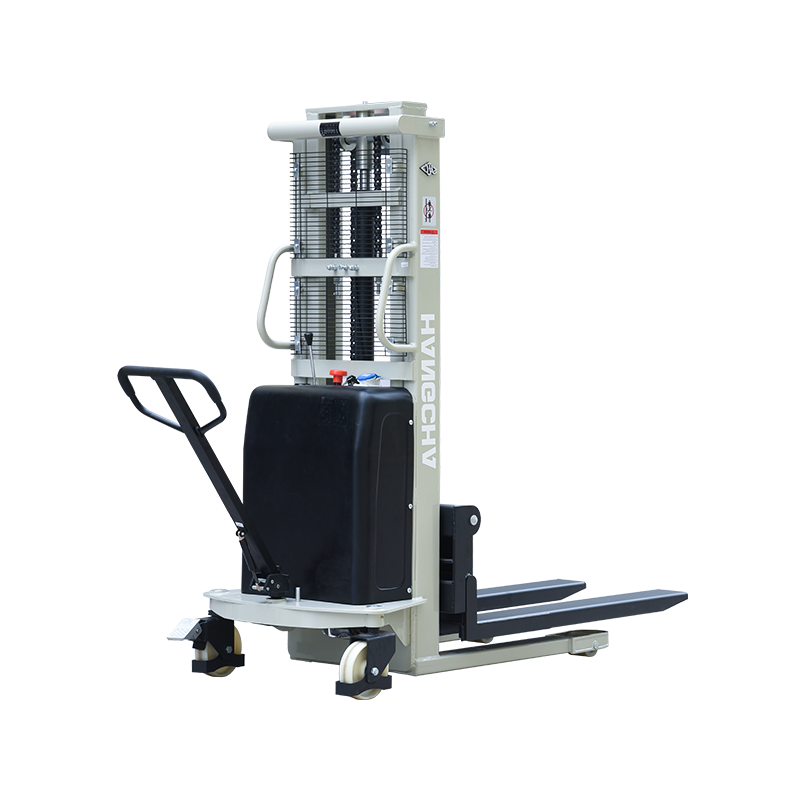
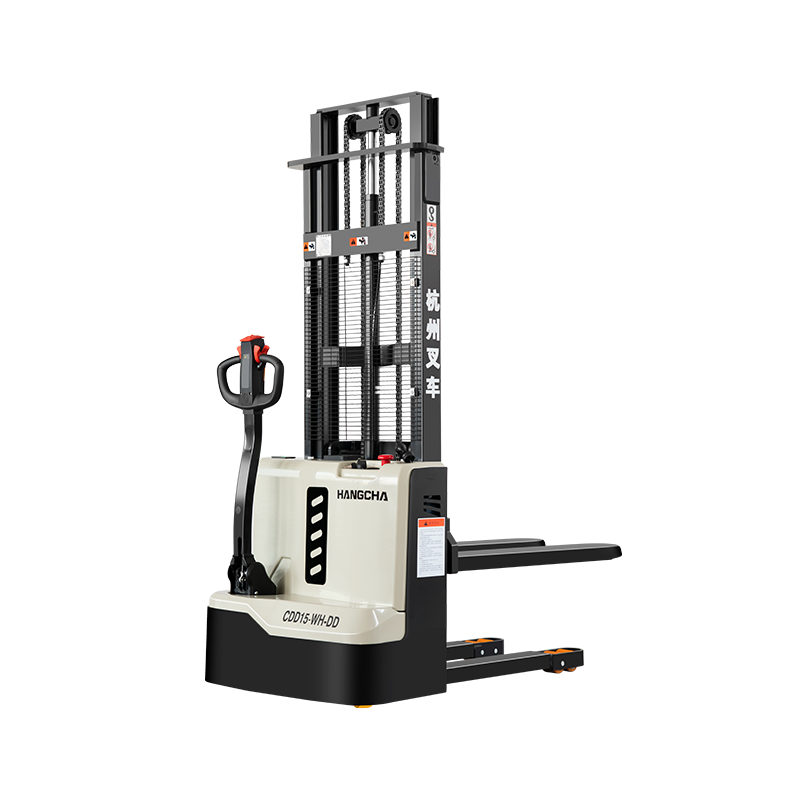
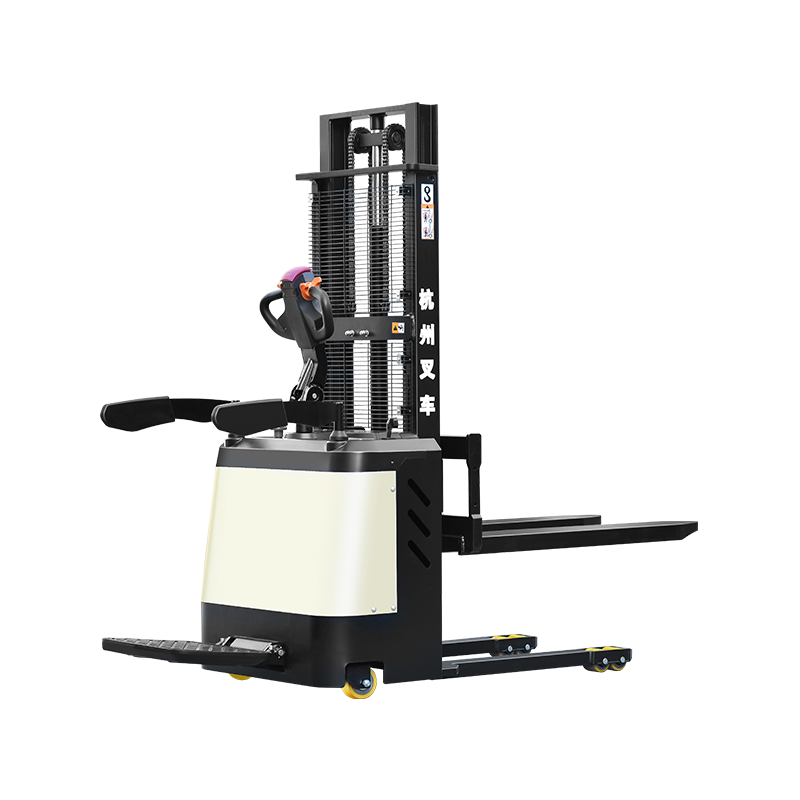
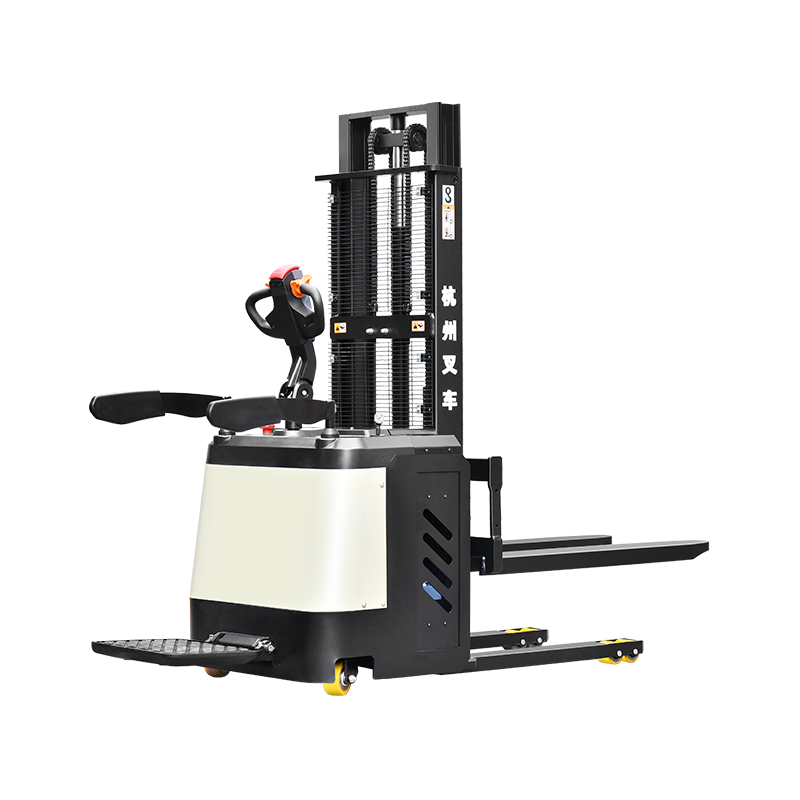
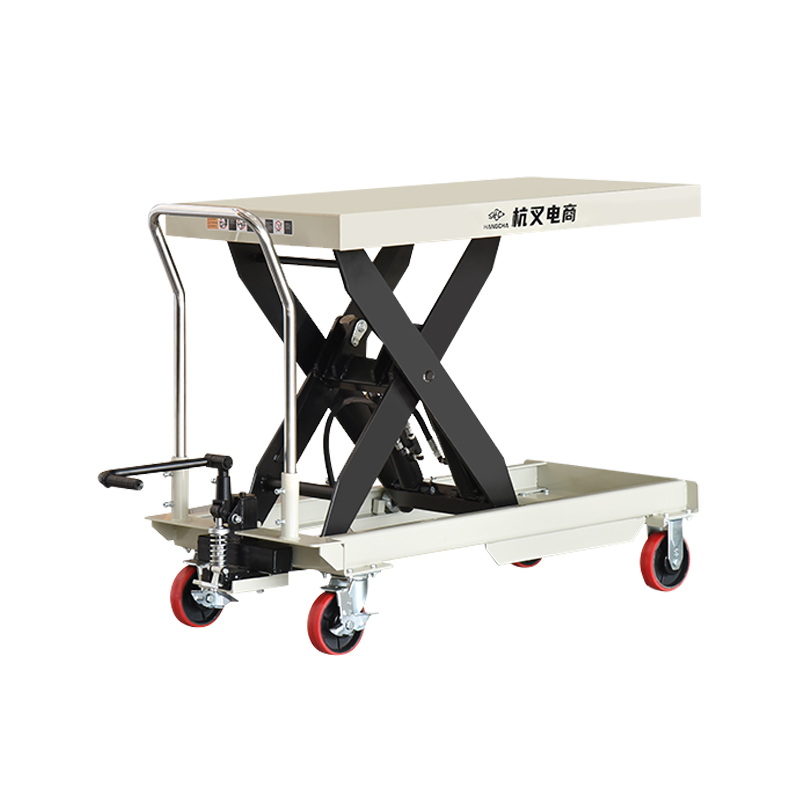
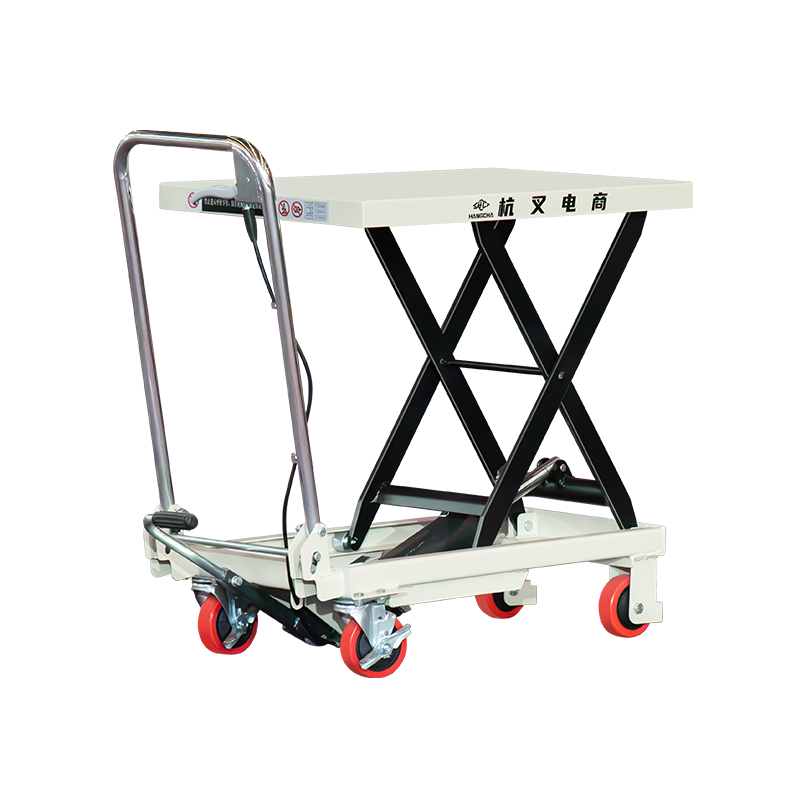
If you run a warehouse or distribution center, you know that moving heavy stuff from point A to point B—and often way up high—is the name of the game. That’s why your material handling equipment, especially your lift trucks, is the backbone of your operation. But when it comes to choosing the workhorse for your aisles, the options often boil down to two heavy hitters: the forklift and the reach truck.
Simply put, a forklift is the versatile, reliable pickup truck of the warehouse world, designed to handle heavy loads and often work indoors and out. A reach truck, on the other hand, is the specialized high-rise climber, built specifically to navigate narrow aisles and lift pallets to impressive heights in densely packed warehouses.
Choosing the wrong machine can seriously cost you, whether it’s wasted space, slower cycle times, or unnecessary operating expenses.
When most people picture a machine moving pallets, they're picturing a forklift. It’s the original, general-purpose workhorse of the material handling world.
At its core, a forklift (or lift truck) is designed to lift, move, and lower materials over short distances. Its basic functionality relies on a pair of forks mounted on a mast that uses hydraulics to raise and lower the load. Crucially, the stability of a standard forklift—especially the common counterbalance type—comes from the heavy weight built into the rear chassis, which balances the load carried out front. Think of it like a seesaw, with the front wheels acting as the fulcrum.
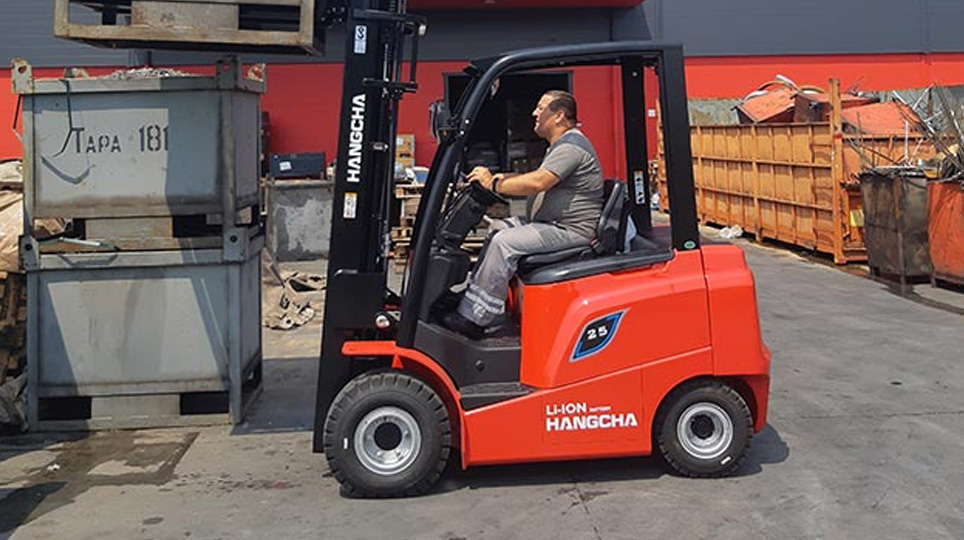
The term "forklift" actually covers a wide range of machines, often categorized by their power source and tire type (Classes I through V, if you want to get technical). The most common types you’ll see are:
Counterbalance Forklifts: These are the standard ones—reliable and versatile, using that rear counterweight for stability. They come in both electric and internal combustion (IC) models (propane, gas, or diesel).
Warehouse Forklifts (Often Electric Riders): Generally used indoors where emissions are a concern.
Rough Terrain/Pneumatic Tire Forklifts: Built with rugged tires and powerful engines to handle outdoor construction sites or uneven yard surfaces.
In terms of work, the forklift is the ultimate generalist. Its typical applications include:
Loading and Unloading: Quickly handling trucks, trailers, and railcars in the yard or dock bay.
Moving Pallets: Transporting pallets from the dock to staging areas or ground-level storage.
General Hauling: Moving heavy, bulky items that don't need to be stacked excessively high.
A forklift is built to be a rugged all-rounder that can handle the heavy lifting, both inside the warehouse and out in the yard.
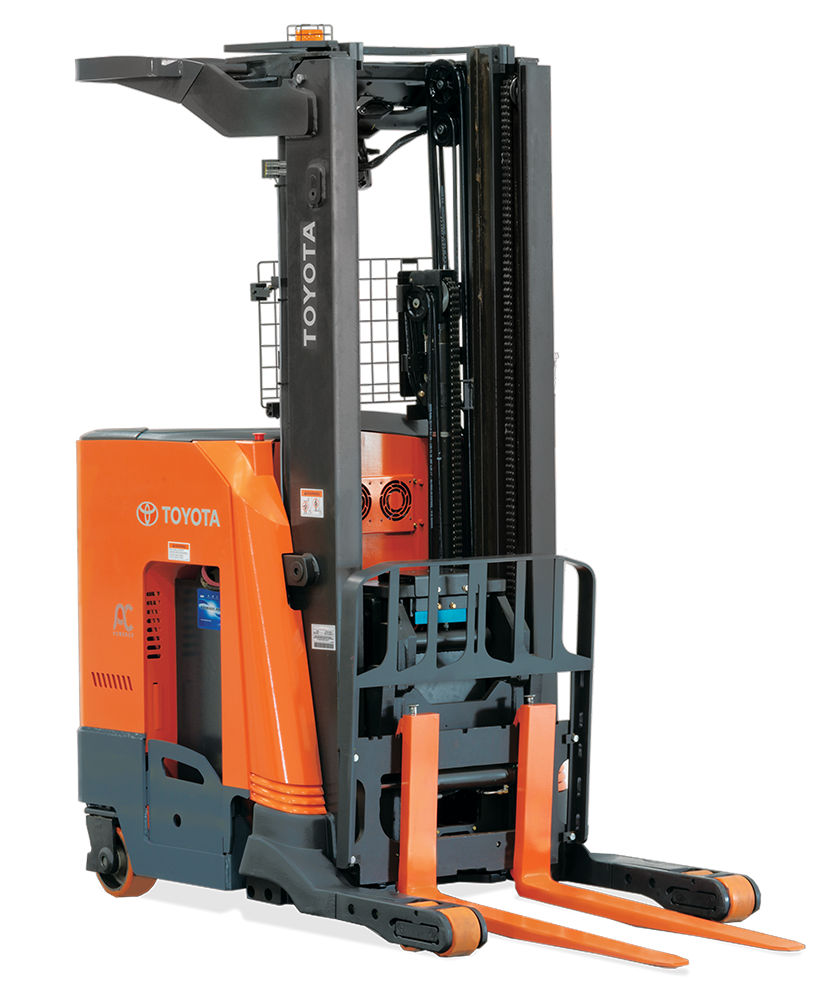
If the forklift is the pickup truck, the reach truck is the compact, highly efficient sports car of the warehouse—built for speed and precision in tight quarters.
A reach truck is a motorized, stand-up lift truck designed specifically for operations in narrow aisles and for accessing high racking. Unlike a counterbalance forklift, which uses a heavy rear weight, a reach truck achieves its stability and high lifting capability using front outriggers (or straddles) that extend under the load.
The defining feature—and the reason for its name—is the pantograph or moving mast assembly.
The mast itself moves forward, allowing the forks to "reach" out and pick up or deposit a pallet away from the main body of the truck.
Once the load is secured, the mast and forks retract the pallet back within the footprint of the outriggers. This retraction feature keeps the load centered and stable while traveling, especially when lifting to extreme heights.
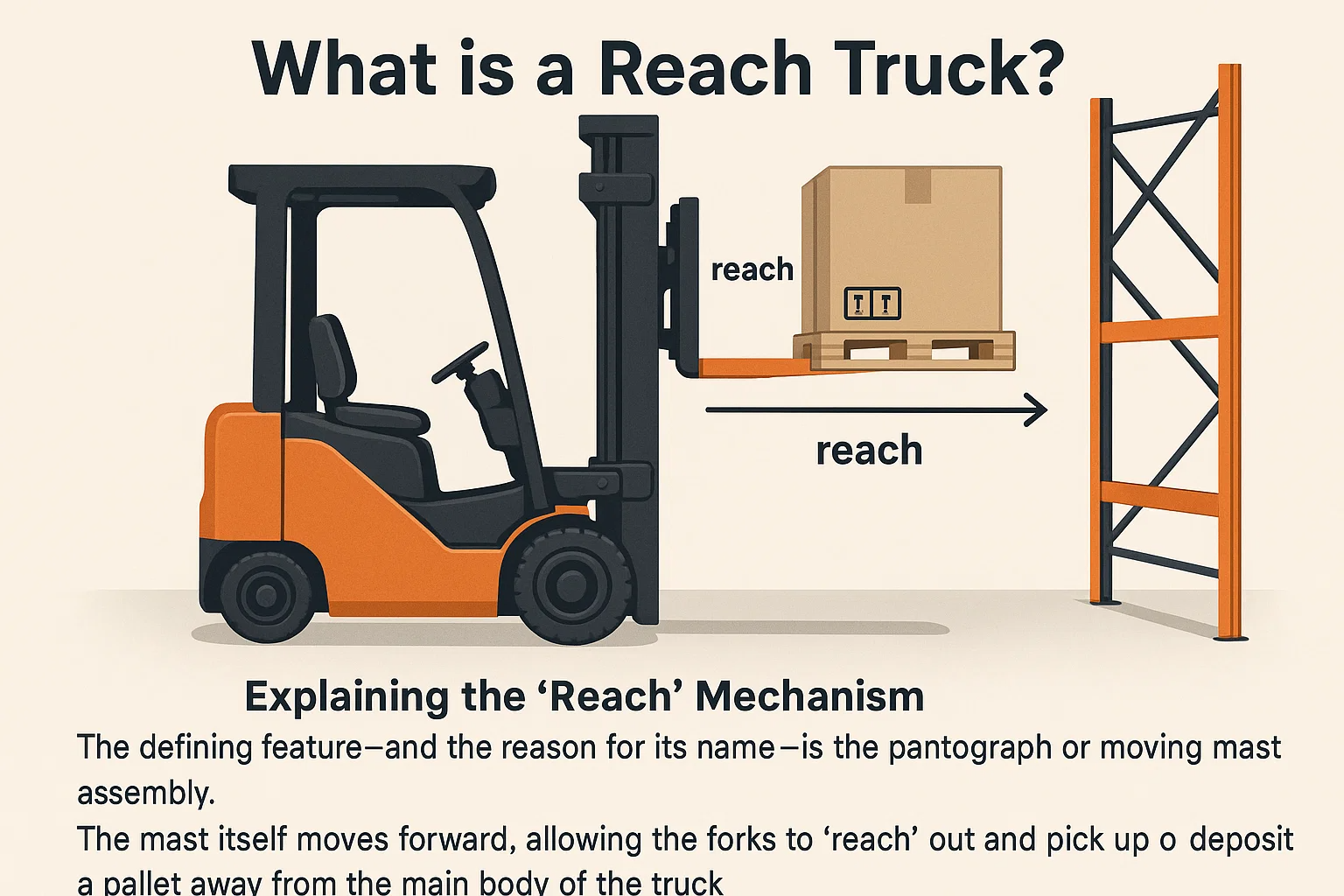
This design gives the operator the precise control needed to maneuver pallets in tiny spaces.
Reach trucks are purpose-built for optimizing vertical and horizontal space, making them essential for modern, high-density storage:
Narrow Aisle Warehouses: They excel in aisles that are often 8 to 10 feet wide, which is significantly smaller than the 12 to 15 feet a standard counterbalance forklift typically requires. This is their primary job.
High Racking Systems: They are engineered to lift higher than most standard forklifts, sometimes reaching up to 45 feet, making them perfect for maximizing vertical storage capacity.
Deep Reach Applications: Some models offer a double-deep reach capability, allowing them to stack two pallets deep in the rack, further increasing storage density.
In short, if you're serious about cramming as much product as possible into your cubic space, the reach truck is your key tool.
These two machines might look similar from a distance, but their fundamental design differences lead to totally different operational strengths and weaknesses.
| Feature | Reach Truck | Forklift (Counterbalance) |
| Aisle Width | Narrow (Typically 8–10 feet) | Wide (Typically 12–15 feet) |
| Turning Radius | Very tight; designed to turn 90 degrees within the aisle. | Wider radius; requires more space to execute turns. |
| Verdict | Better for tight spaces and maximizing storage density. | Requires more space, leading to lower storage density. |
Reach trucks are the undisputed champions of vertical storage. They are specifically engineered to lift much higher than most standard forklifts.
Reach Trucks: Easily reach 30 to 45 feet, making them ideal for modern, high-bay warehouse racking systems. Their mast design is built for stability at these extreme heights.
Forklifts: Standard models typically max out between 15 and 25 feet. While specialized high-lift forklifts exist, the standard models cannot compete with the vertical capability of a reach truck.
This is often where the sturdy counterbalance forklift takes the lead, particularly for the heaviest goods.
Forklifts: Due to the heavy counterweight system, standard forklifts can handle heavier, bulkier loads, with capacities often ranging up to 15,000 lbs or more for industrial models.
Reach Trucks: While capable, their design prioritizes vertical lift and narrow operation over sheer brute strength. Standard capacities are usually lower, often ranging from 2,500 lbs to 4,500 lbs. If you're moving extremely heavy materials, the forklift wins.
The way each machine stabilizes a load is perhaps the biggest mechanical difference:
Forklifts (Counterbalance): Stability relies on a large, fixed counterweight built into the rear of the machine, which compensates for the load extending forward.
Reach Trucks: Stability comes from their outriggers/straddles that hug the ground, plus the retraction mechanism that pulls the load back over the outriggersbeforetravel. They are very stable when operated correctly within a narrow aisle.
Reach Trucks: Operators are generally standing sideways in a secure compartment. This allows them to easily look up at high-level racking, glance backward for reverse travel, and step on and off the unit quickly.
Forklifts: Operators typically sit in a seat, which is generally considered more comfortable for long shifts and is better suited for outdoor/rough terrain applications where the seat provides better suspension.
Reach Trucks: Almost exclusively for indoor use on smooth, level concrete floors. They are not built for rough patches, uneven pavement, or outside yards.
Forklifts: Can be used indoors and outdoors. With cushion tires, they are great for smooth indoor use; with pneumatic (air-filled) tires, they can comfortably handle asphalt, gravel, and uneven warehouse yards.
Initial Purchase Price: Reach trucks are highly specialized pieces of equipment and often come with a higher initial price tag compared to a standard counterbalance forklift of similar capacity.
Maintenance and Operating Costs: Both are reliable, but the power source is key. Reach trucks are almost always electric, meaning lower fuel costs but relying on battery maintenance. Forklifts can be electric (similar costs) or IC (lower upfront battery cost, but ongoing fuel and engine maintenance).
Reach Trucks: Virtually always Electric (battery-powered). This makes them clean and quiet, ideal for food, pharma, and indoor-only use.
Forklifts: Can be Electric (clean, quiet) or Internal Combustion (IC), running on propane, gasoline, or diesel. IC models offer unlimited run time (just refuel) but produce emissions, making them less suitable for tightly enclosed indoor areas.
The reach truck is a highly specialized tool. When you use it in the environment it was designed for, its efficiency is unmatched. However, that specialization comes with certain limitations.
Maximum Space Utilization: This is the big one. By requiring aisles that are significantly narrower than those for forklifts, a reach truck allows you to fit more racking rows into the same floor space. This can dramatically increase your warehouse’s storage density and save on real estate costs.
Superior High Lifting Capabilities: Engineered for verticality, reach trucks can consistently lift pallets to extreme heights (often over 40 feet) with precision and stability, fully utilizing cubic space.
Precise Load Handling: The hydraulic reach mechanism and the operator's standing, sideways position provide excellent visibility and control, allowing for very accurate placement and retrieval of pallets in high racking.
Clean Operation: Almost all reach trucks are electric, meaning they are quiet, produce zero emissions, and are perfect for sensitive environments like food processing, cold storage, or pharmaceutical facilities.
Lower Load Capacity: As noted, they are designed for maneuverability and height, not brute strength. They typically handle lighter maximum weights than large counterbalance forklifts.
Indoor Use Only: Their small, hard wheels and low undercarriage are meant for smooth, level concrete. Taking a reach truck outside onto gravel or rough asphalt is generally a recipe for damage or instability.
Higher Skill Level Required: Operating a reach truck at extreme heights requires a highly skilled, focused operator. The learning curve can be steeper, and training is absolutely essential for safe high-level retrieval.
Limited Versatility: They are specialized for narrow-aisle pallet handling. You can't use them to load a truck from the side of a trailer or haul a heavy non-palletized item across a yard.
The forklift is the versatile generalist—it's built to handle almost any job you throw at it, making it the bedrock of warehouse and yard logistics for decades.
Higher Load Capacity: Thanks to the heavy counterbalance design, standard forklifts can handle significantly heavier loads than most reach trucks. If your product is dense and heavy, the forklift is often the only viable choice.
True Versatility: Indoor and Outdoor Use: This is a major selling point. Depending on the tire type (cushion for indoors, pneumatic for outdoors), a forklift can transition seamlessly between the loading dock, the warehouse floor, and the uneven yard.
Variety of Types and Attachments: Forklifts come in a huge range of types (electric riders, rough terrain, side loaders, etc.) and can be fitted with countless attachments (drum handlers, carpet poles, clamps, etc.), making them adaptable to nearly any material handling job.
Operator Comfort: With a sitting position, many operators find forklifts more comfortable for shifts that require long periods of continuous operation and travel.
Wider Aisle Requirements: To turn and maneuver safely, a standard forklift requires a much wider aisle (typically 12 to 15 feet). This directly translates to less shelving and lower storage density in your facility.
Lower Lifting Heights: While capable of stacking, standard forklifts usually can't reach the extreme heights that a dedicated reach truck can manage. If you have high-bay racking, the forklift will leave valuable vertical space unused.
Less Precise in Tight Spaces: Their wider turning radius and counterweight design make them slower and less agile when trying to place or retrieve a pallet in a high, tight rack opening compared to the "reaching" mechanism of a reach truck.
Emissions (IC Models): If you opt for a powerful Internal Combustion (IC) model (propane, diesel, gas), you introduce engine noise and exhaust emissions, which require ventilation and make them unsuitable for many fully enclosed or sanitary environments.
So, how do you move from the spec sheet to the purchase order? The answer lies in analyzing your specific operational environment. Don't buy a reach truck just because it looks cool, and don't buy a forklift just because it's cheaper. Match the machine to the mission.
This is the single biggest factor. Your decision here is a direct trade-off between storage capacity and operational speed.
Aisle Width: Get out your tape measure.
Narrow Aisles (Under 11 feet)? You need a reach truck. Full stop. It’s the only way to maximize your vertical and horizontal space.
Wide Aisles (12-15+ feet)? A standard forklift will operate comfortably.
Racking Height: How high do you need to go?
High Racking (Above 25 feet): The reach truck’s specialized mast and stability features are essential for safe, efficient high-level retrieval.
Standard Racking (Below 20 feet): A standard forklift can generally handle this, saving you the specialization cost.
Never risk overloading. Your heaviest product dictates the minimum capacity of your machine.
Maximum Load Weight: Determine the heaviest pallet, container, or item you willeverlift. If that weight exceeds the typical capacity of a reach truck (usually 4,500 lbs), you must choose a high-capacity forklift or a specialized heavy-duty model.
Load Dimensions: Are your loads oversized or non-standard? Forklifts, especially with attachments, are generally more versatile for handling awkward or very wide cargo.
Where will the machine spend 90% of its day?
Indoor vs. Outdoor Use: If your trucks frequently move between the warehouse floor and the outdoor loading yard, you need a versatile, pneumatic-tire forklift. If the machine never leaves the smooth, dry concrete of the facility, the electric reach truck is perfectly suitable.
Floor Surface Conditions: Reach trucks need pristine floors. Forklifts, particularly IC models with pneumatic tires, are built to handle bumps, cracks, and the occasional puddle.
Look beyond the sticker price.
Initial Cost: As a specialized machine, the reach truck often has a higher upfront cost than a comparable-capacity standard forklift.
Operating Expenses: Electric (Reach Truck) vs. IC (Forklift). Consider the cost of battery charging and maintenance (electric) versus fuel consumption, oil changes, and engine maintenance (IC). Electric often offers a lower cost per hour over the long run.
Safety is paramount, especially when lifting to extreme heights.
Reach Truck Operation: The controls and high-altitude operation are complex. Operators require specific, thorough training and certification.
Forklift Operation: While all lift trucks require certification, the general skillset for operating a sit-down counterbalance forklift is often more common and easier to teach than high-bay reach truck maneuvering.
When you're ready to buy, you're buying more than just a piece of metal—you're buying into a service network, parts availability, and a reputation for durability. Here are some of the industry leaders you'll encounter in your search:
Since reach trucks are specialized Class II (Electric Narrow Aisle) equipment, they are often dominated by manufacturers focused on indoor warehouse efficiency:
Raymond: Known almost exclusively for their narrow-aisle solutions, Raymond is a benchmark brand for reach trucks, offering high performance and excellent ergonomics. (They are part of the Toyota Industries Corporation family.)
Crown: Another heavy hitter in the electric warehouse space. Crown is renowned for building rugged, durable, and highly ergonomic lift trucks, particularly their stand-up reach models.
Jungheinrich: A top European manufacturer that places a strong emphasis on energy efficiency and specialized warehouse equipment, including high-reaching models.
Hyster & Yale: Both brands (part of Hyster-Yale Materials Handling) offer robust reach truck models that benefit from their global parts and service networks.
These companies tend to be market leaders globally and offer a massive range of products, from small electric units to heavy-duty internal combustion models:
Toyota: Consistently ranked as the world's largest forklift manufacturer. Toyota is synonymous with quality, reliability, and their System of Active Stability (SAS) for safety. They offer both excellent IC and electric counterbalance models.
Hyster & Yale: These two sister brands are giants in the North American market, known for their durable, high-capacity trucks across both IC (gas, propane, diesel) and electric classes.
Caterpillar (CAT): Part of Mitsubishi Logisnext, CAT is a trusted name, particularly for heavy-duty, IC-powered forklifts built for rugged environments, much like their construction equipment.
Clark: Often cited as the pioneer of the lift truck industry, Clark is known for building rugged, durable, and dependable forklifts across various types.
Hangcha: A major global force, often recognized for providing excellent value without sacrificing quality. They are particularly strong in the electric sector and have invested heavily in modern lithium-ion battery technology, making them a formidable option if budget and new energy sources are a top priority.
| If you prioritize... | You need a Reach Truck | You need a Forklift |
| Space | Narrow aisles, high-density storage, and maximum vertical lift. | Wide aisles and open staging areas. |
| Environment | Indoor, smooth floors, and zero emissions. | Indoor/outdoor flexibility and uneven terrain. |
| Capacity | Lighter, palletized loads up to medium height. | Heavy, bulky loads and general-purpose movement. |

+86-0571-88131206

+86-19084200370

+86-17816721301
 عربى
عربى